Young students are fascinated by animals, which makes winter the perfect time to explore how animals survive cold weather. When teaching animals in winter, I like to focus on three key concepts—hibernation, migration, and adaptation—because they help young learners make meaningful connections between science and the real world.
In this post, I’m sharing my favorite hands-on animal adaptation and migration activities, along with crafts, videos, and printables that work especially well in Pre-K, kindergarten, and first-grade classrooms. I have a separate post for hibernation. You can read it here.
Want to save time and have everything ready-to-use? The printable patterns, craft templates, writing prompts, and bulletin board pieces shown in this post are available in my Animal Adaptation & Migration Activities resource.
If you’re teaching hibernation, migration, and adaptation together, you can save planning time by grabbing the Animals in Winter Bundle, which includes all three units in one discounted pack.
Animal Migration and Adaptation Videos for Kids
I’ve found several videos that help explain the concepts of animal migration and adaptation for younger students.
•What Do Animals Do in the Winter? Adaptation
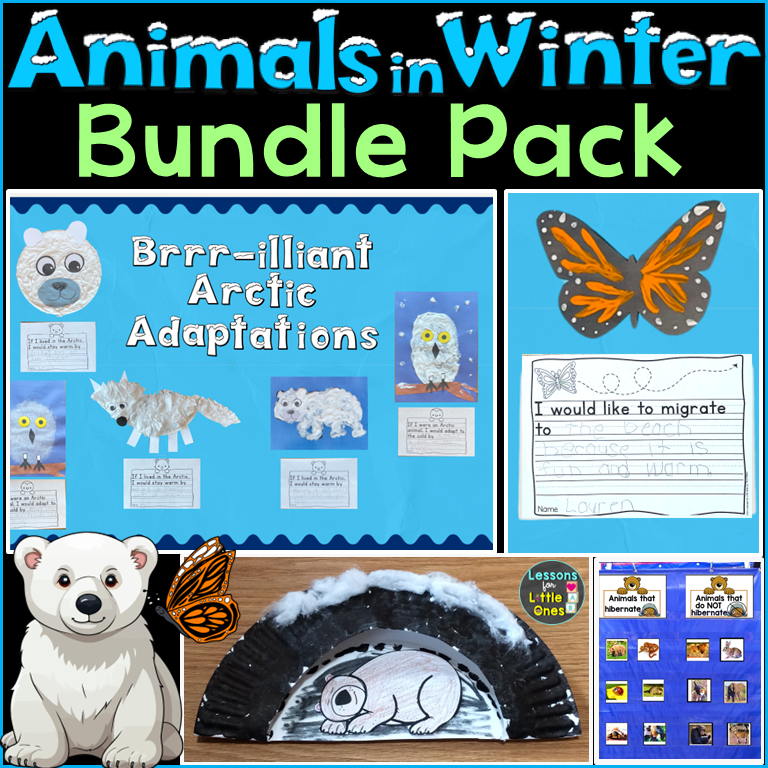
Animal Adaptation & Migration Sorting Activities
Sorting activities are an excellent way to help young learners develop critical thinking skills while reinforcing their understanding of migration, and adaptation.
Since young students have a natural desire to create order and make sense of things around them, they love categorizing animals based on their winter survival strategies.
- Why it’s beneficial: Sorting helps students recognize patterns and relationships, training their brains to better organize and retrieve the new information.
- Why students love it: The colorful images and hands-on nature make learning feel like play!
Sorting activities are versatile—you can use them in a pocket chart during whole group instruction to introduce the concept and then transition them into centers or independent work for reinforcement.


After students are more familiar with the concepts of migration and adaptation, I like to sort the animal cards into groups for the students without using the headers and have students figure out how they are sorted.
Children need practice in both sorting objects into groups AND looking at groups of objects that have already been sorted and figuring out how they are sorted.
Migration Monarch Butterfly Craft Project & Bulletin Board
For this activity students create migrating monarch butterflies and then write about where they would like to migrate during the winter.
Craft projects are a fantastic way to keep young students engaged while enhancing their fine motor skills, practicing following directions, and reinforcing what they’ve learned.
I like pairing crafts with writing because it allows students to express their creativity as well as their understanding of the concept. Plus, they turn out so darn cute and I love seeing their creative answers to the writing prompts!
These monarch butterfly crafts are so simple to prepare, and each one turns out so beautiful! Cut out a butterfly pattern from black paper and then have your students use their fingers or Q-Tips dipped in paint to create the monarch’s design.


While the paint is drying, students complete their writing prompts.

I then make a migration bulletin board using their monarch butterfly crafts and writing prompts. Displaying students’ artwork builds their confidence and conveys to them that their work is valued. The display is more meaningful to them because they had a part in creating it.

Animal Adaptations Craft Projects & Bulletin Board
For this activity, students create arctic animal crafts and then write about how they would adapt to the cold if they lived in the Arctic OR how they would adapt to the cold if they were an Arctic animal.
I love giving students choice, so I let them choose from 3 different Arctic animal crafts: snowy owl (Arctic owl), polar bear, or Arctic fox.
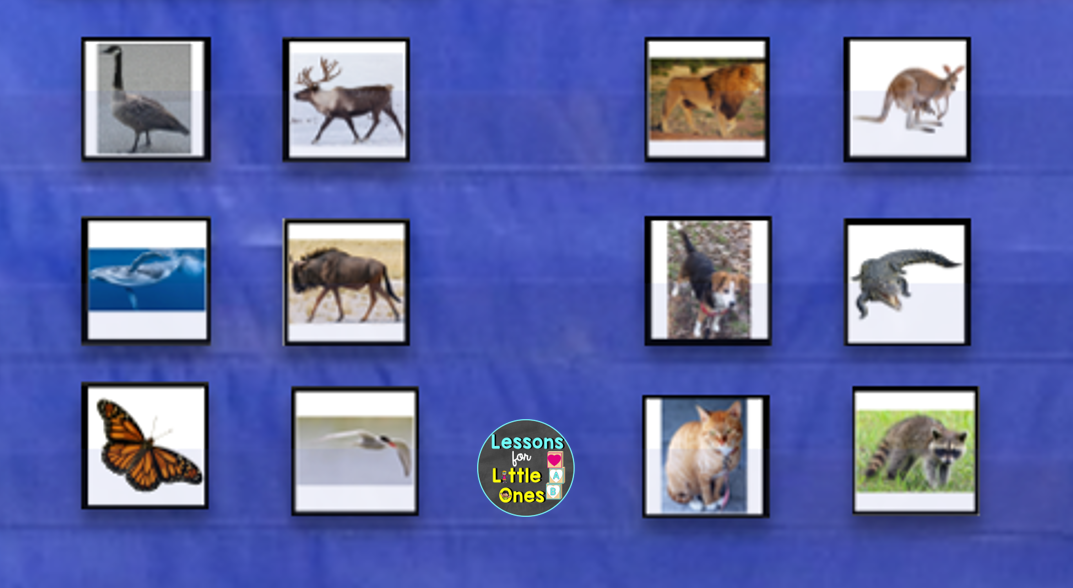
The Arctic fox craft is made from paper plates. Cut a paper plate in half. Fold one half into a triangle shape. Place your stapler inside the triangle and staple the ends together.
Place your stapler inside the triangle shape and staple it to the other paper plate half. Then, cut a tail from another paper plate and staple it to the body.

Students glue on paper ears, eyes (or wiggly eyes), a nose, and legs.
Then, they can create thick, white fur by either scrunching up white tissue paper and gluing it on the fox’s body OR painting it with puffy paint. Puffy paint is a fun, textured paint that dries with a raised, puffy appearance, adding a 3D effect to art projects. To make puffy paint, mix equal parts glue and shaving cream together.
Both versions turn out so cute!
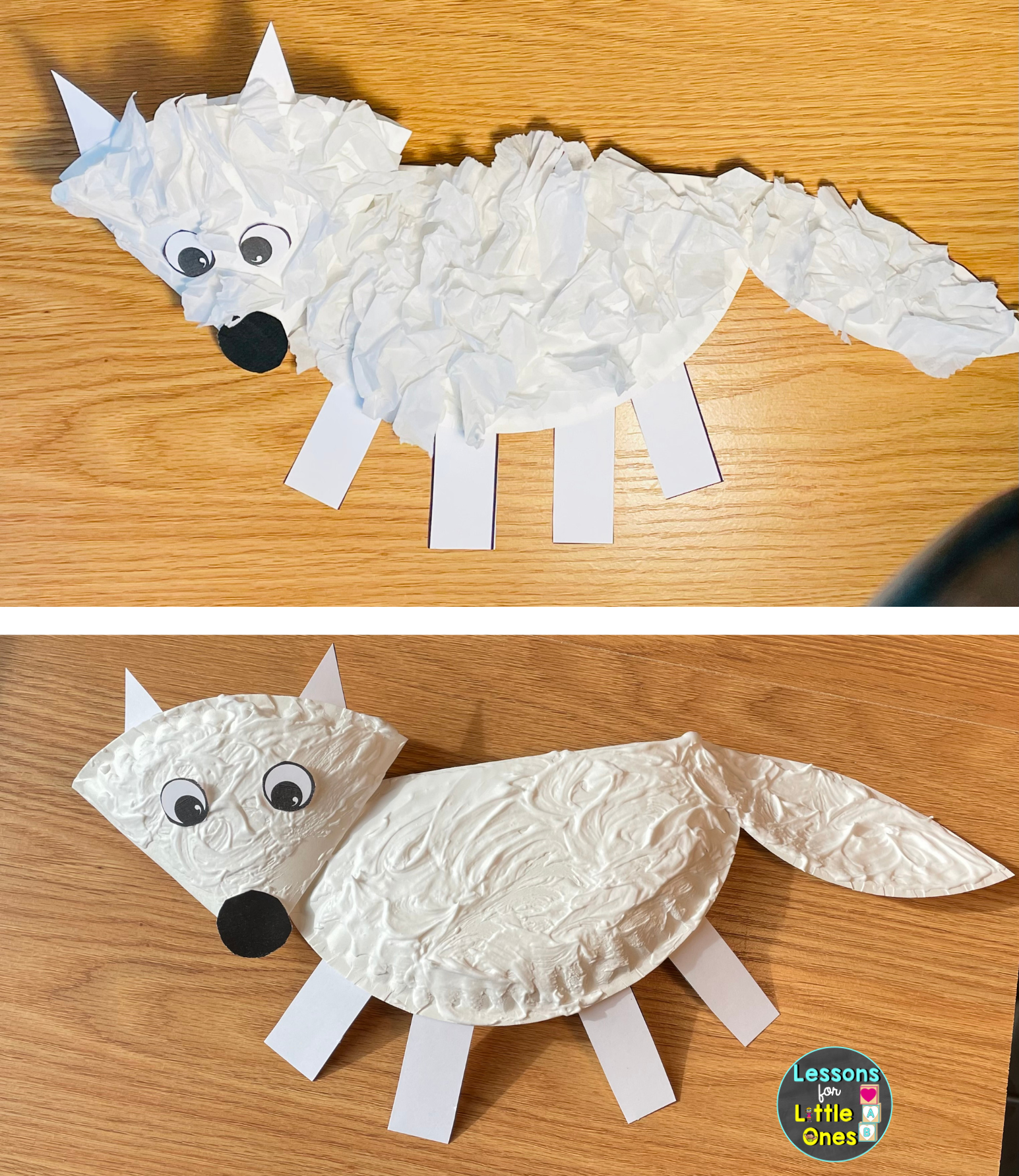
For the polar bear craft, I let students choose whether they would like to make the entire body or just the head. The whole body craft is a polar bear pattern printed on blue construction paper. The polar bear head is a paper plate.
Students paint their polar bears with puffy paint to resemble thick fur and then glue on eyes, muzzles, and ears.
I have used two different versions of the snowy owl craft. They are very similar and both work well. The only difference is how the students paint their owls.
In the first version, students dip either a puffy loofah sponge, a regular sponge, or a large handful of fiberfill into white paint and press it onto a piece of blue construction paper to resemble an owl body (oval shape).
In the second version, students use paintbrushes to paint an owl body (oval shape) with puffy paint.
After they paint their body, students cut a branch out of brown construction paper, crumple it to give it texture, and glue it underneath the owl’s body.
Lastly, students cut out the eyes, nose, and feet, then glue them to the owl’s body.

While their animal art projects are drying, I have students complete animal adaptation writing prompts. They can choose from two different prompts: “If I lived in the Arctic, I would stay warm by…” or “If I were an Arctic animal, I would adapt to the cold by…”.

I then make an animal adaptations bulletin board using their Arctic animal crafts and writing prompts. Showcasing student work builds their confidence and creates a classroom environment that celebrates learning.
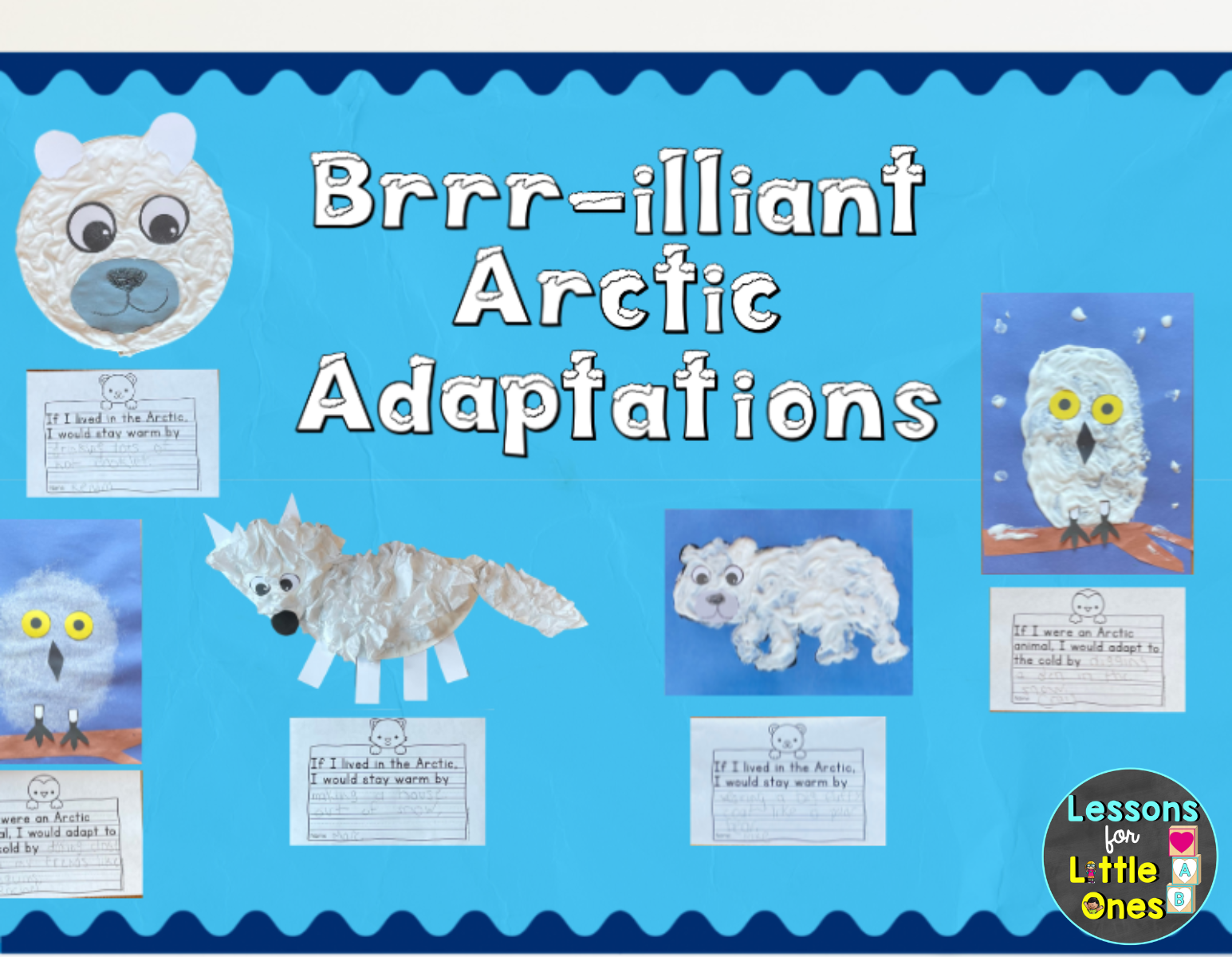
If you’d like these adaptation crafts, writing prompts, and bulletin board ideas already organized and ready to go, they’re included in my Animal Adaptation & Migration Activities resource.
Many teachers choose the Animals in Winter Bundle so they have hibernation, migration, and adaptation lessons ready for the entire winter unit.
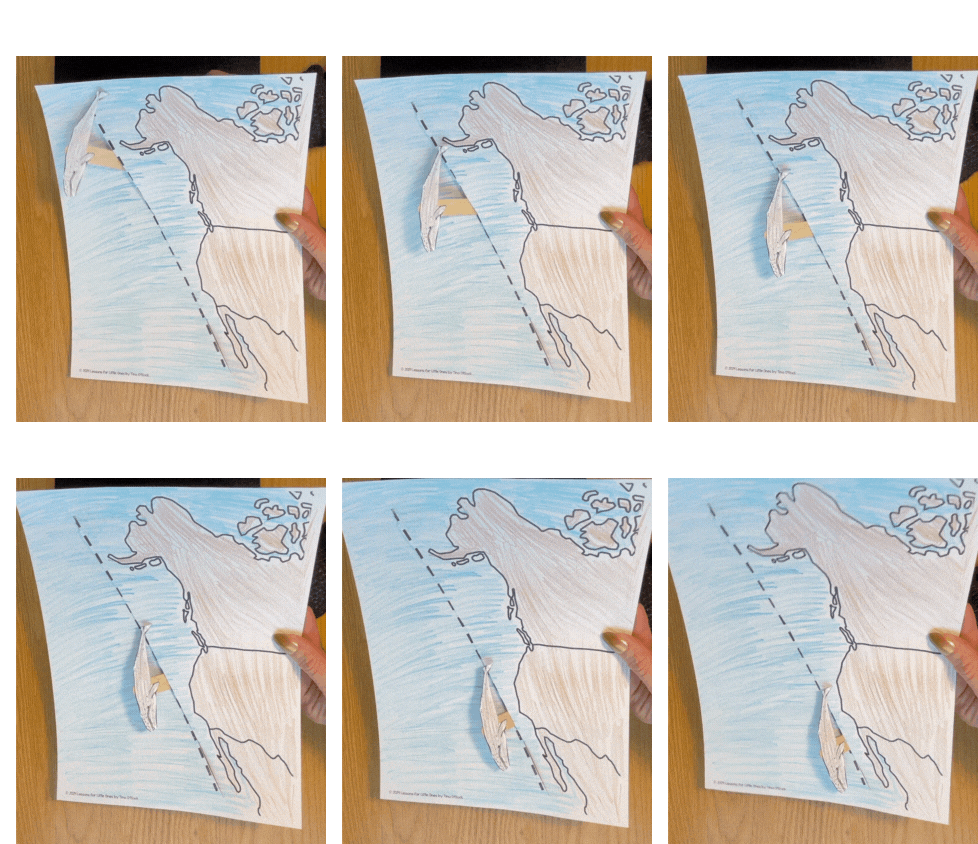
Movable Migration Maps
I wanted a way for younger students to better understand the meaning of migration and the distances animals travel while migrating.
These interactive maps help young students learn that when animals migrate they move from one location to another. They also show them where various animals migrate during the winter months. Students love “helping” the animals migrate! We made maps for gray whales, monarch butterflies, Arctic terns, and wildebeest.

Animal Camouflage Collage
This fun project helps students understand and visualize how white animals adapt and blend in with their snowy environments.
Students create snowy scenes using puffy paint (equal parts white glue and shaving cream), white tissue paper, cotton balls, white fabric scraps, or any other available craft materials and then “hide” animals in them. They love finding each other’s animals when finished!

Which Animals Migrate or Adapt? Printable Pages
I like using these printable pages to check individual student understanding. They are easy for young students to complete independently.


If you’d like to use these animal adaptation and migration activities with your students while saving planning time, you can download the printable patterns, writing prompts, bulletin board letters, and step-by-step photo directions here or by clicking the cover photo below.
👉 For a complete winter science unit, upgrade to the Animals in Winter Bundle and receive hibernation, migration, and adaptation activities all in one discounted pack.


Upgrade to the Animals in Winter Bundle to have hibernation, migration, and adaptation activities ready for your entire winter unit.