Why Place Value for Teen Numbers Matters in Kindergarten
Place value for teen numbers is one of the most important math concepts we teach in kindergarten — and it’s also one of the trickiest.
Teen numbers can be confusing.
On paper, they look simple.
11, 12, 13… all the way to 20.
But developmentally?
These numbers are a huge leap for our little learners.
Why is 14 “fourteen” instead of “ten-four”?
Why does the 1 mean ten?
Why isn’t 17 just 7 with a 1 in front?
If we don’t make place value concrete, teen numbers become something students memorize… instead of understand.
And we don’t want memorized math.
We want students to see that 17 is really:
- 1 group of ten
- and 7 ones
In Kindergarten, we begin laying the foundation for base-ten understanding.
We aren’t expecting mastery of two-digit numbers yet — but we are helping students understand that:
- Teen numbers are made of one group of ten and some extra ones.
- The “1” in 14 does not mean “one.”
- It means one group of ten.
That concept — that numbers are made of parts — is the beginning of true number sense.
If students don’t understand that 14 is “one ten and four ones,” they often:
- Count every cube one by one
- Reverse digits (41 instead of 14)
- Say “fourteen” but do not understand what it represents
Place value is the bridge between counting and understanding.
Why Teen Numbers Are So Tricky
Teen numbers don’t follow a clean pattern.
Twenty-one. Twenty-two. Twenty-three.
That makes sense.
But eleven? Twelve? Thirteen?
There’s nothing about the word “fourteen” that screams “one ten and four.”
Our students are memorizing names that don’t clearly match the structure of the number.
So when we show them 16, many students will:
- See 6 ones and say “six”
- Ignore the ten
- Or count every block individually
This is completely developmentally normal.
That’s why we can’t just teach teen numbers with flashcards and worksheets.
They need to see it.
Touch it.
Build it.
Making Place Value Concrete
In my classroom, I always introduce teen numbers using hands-on models.
We build numbers.
We physically make a group of ten using counting cubes or gluing 10 pom-poms on a craft stick.
We separate tens and ones.
We talk about it constantly:
- “How many tens do you see?”
- “How many extra ones?”
- “What number does that make?”
When students can move the cubes themselves, something clicks.
Instead of memorizing “14,” they begin to understand it.
And that’s the goal.
Why I Love Using a Place Value House
One of my favorite ways to make this concept visual is by using a simple “place value house.”
The house becomes the whole number.
Inside the house:
- One room is for tens.
- One room is for ones.
The number “lives” in the house.
When students place the tens in one room and the ones in the other, they are physically organizing the number into its parts.
It turns an abstract idea into something concrete and visual.
Making It Meaningful (and Fun) in March
Once students understand how the “house” works, it’s time to let them build.
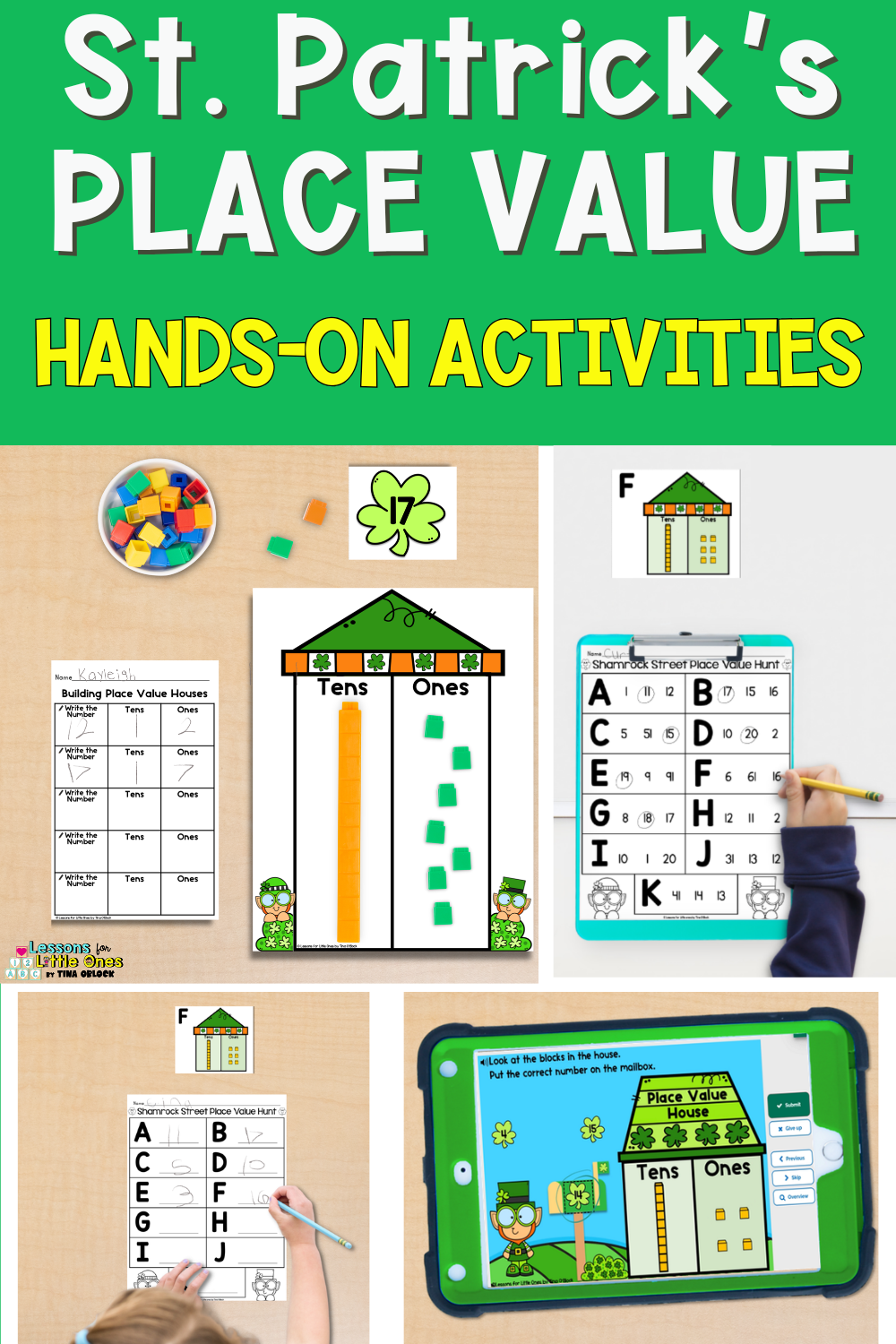
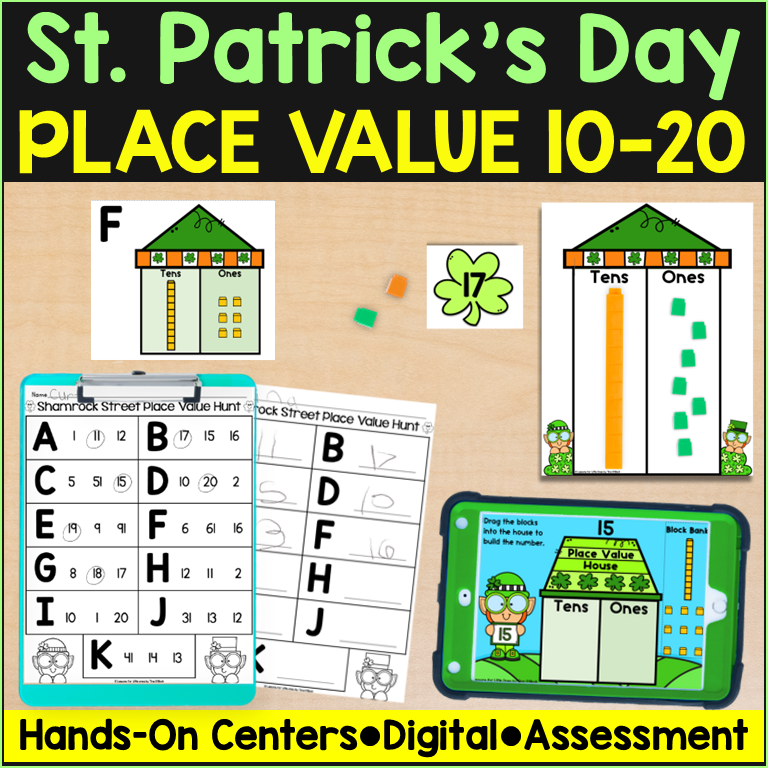
Since we practice teen numbers and place value in the spring, I like to make it meaningful and fun for students by using a St. Patrick’s Day theme. The place value house is a leprechaun house.
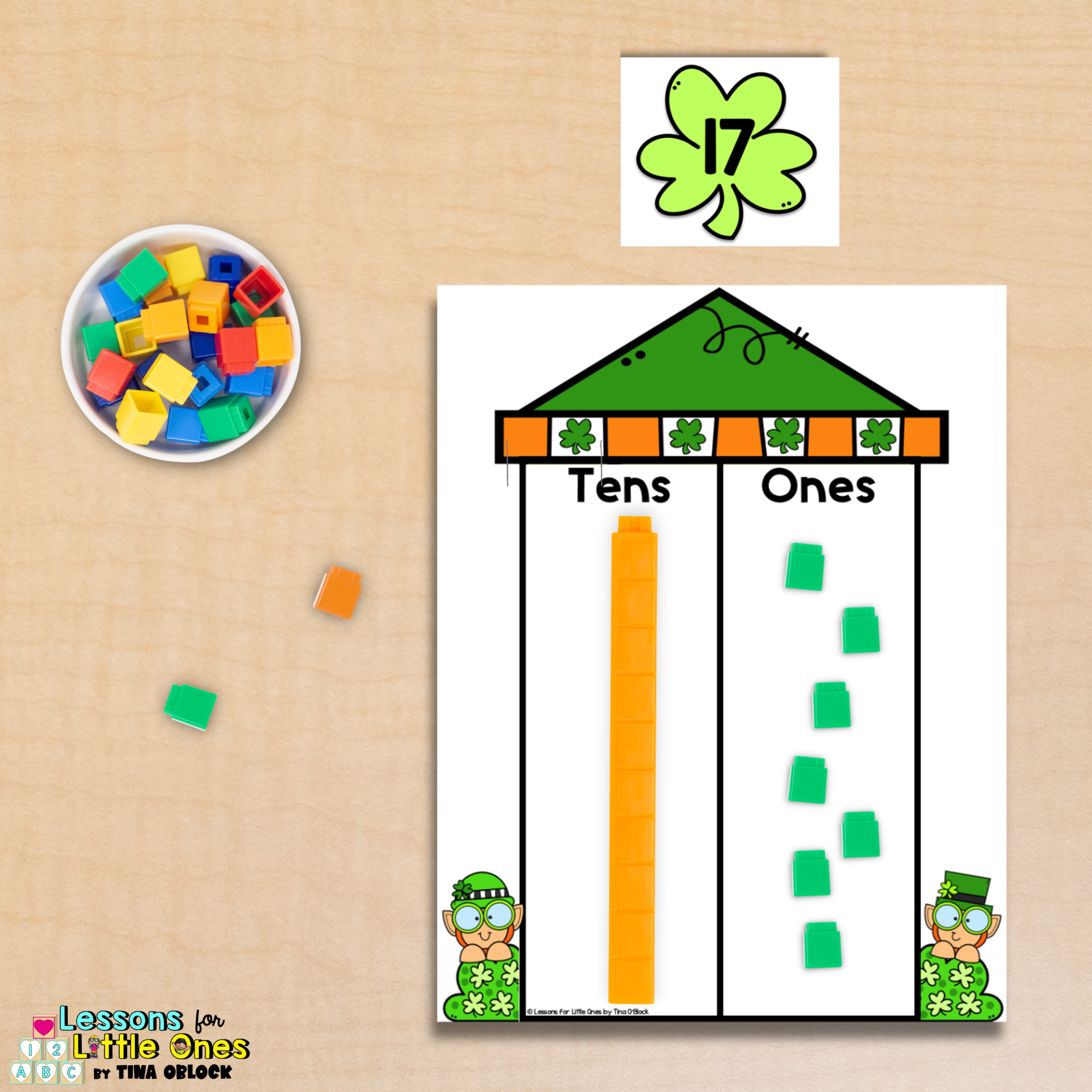
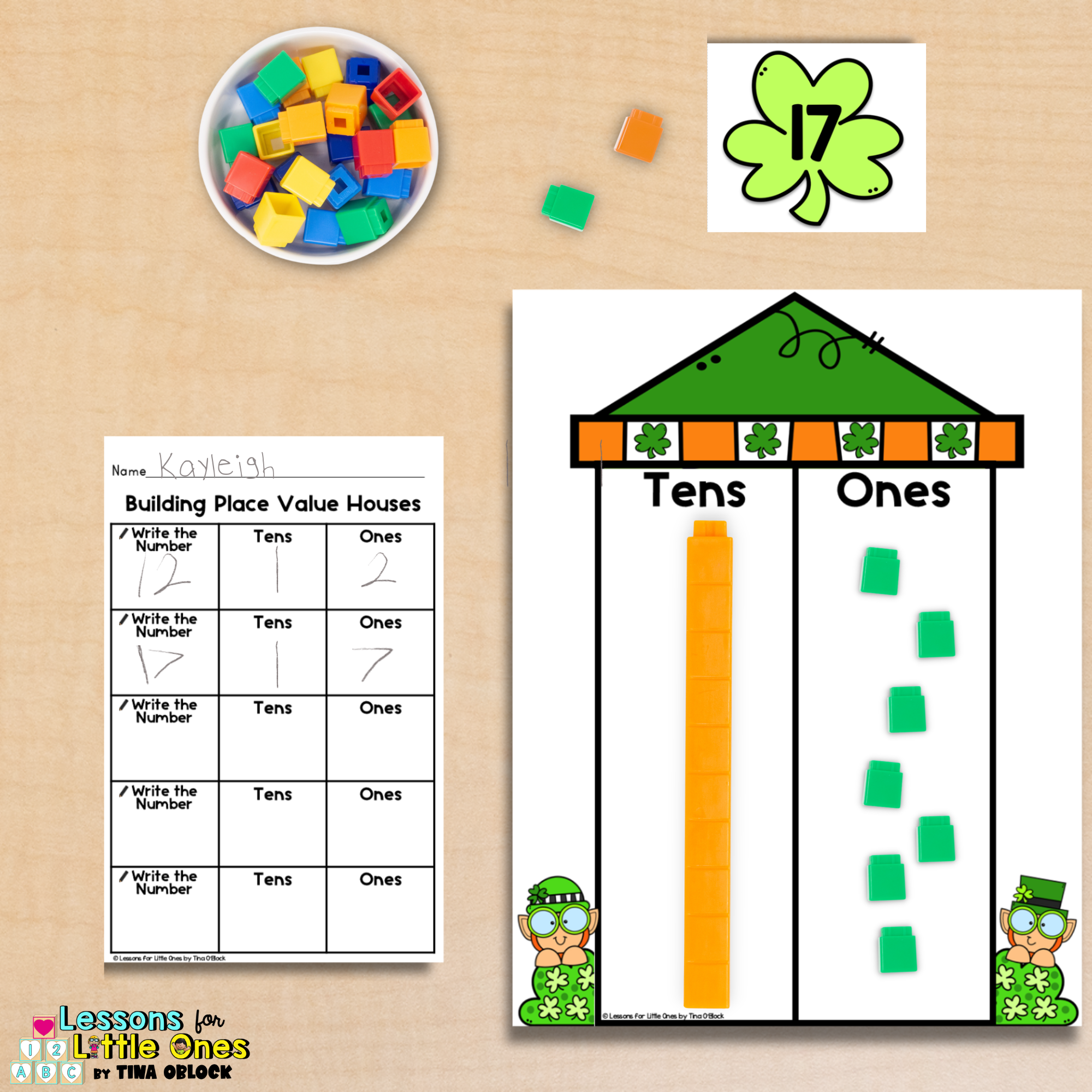
Students draw a shamrock number card.
Then they physically build that number inside their leprechaun place value house.
In the Tens room, they place:
• A tens rod
or
• A stack of 10 linking cubes
In the Ones room, they place:
• Individual cubes to represent the extra ones
They aren’t just placing cubes.
They are seeing that:
17 is not “just seventeen.”
It is 1 ten and 7 ones.
That repetition — build it, say it, see it — reinforces the structure of teen numbers in a concrete way.
After students build the number, they record their thinking.
On their half-sheet recording page, they:
• Write the number
• Write how many tens
• Write how many ones
This step is important.
It connects the concrete model (the cubes) to the abstract number symbol.
Students begin to understand:
The numeral 14 represents
1 ten
and
4 ones.
If students complete all five boxes, they simply grab another sheet and keep building.
More practice.
More repetition.
More understanding.
Adding Movement and St. Patrick’s Day Engagement
Once students understand how to build the number, we move into movement.
By March, our students need engagement.
They need movement.
They need novelty.
They need something that feels fun.
That’s why I love using seasonal math centers for place value practice.
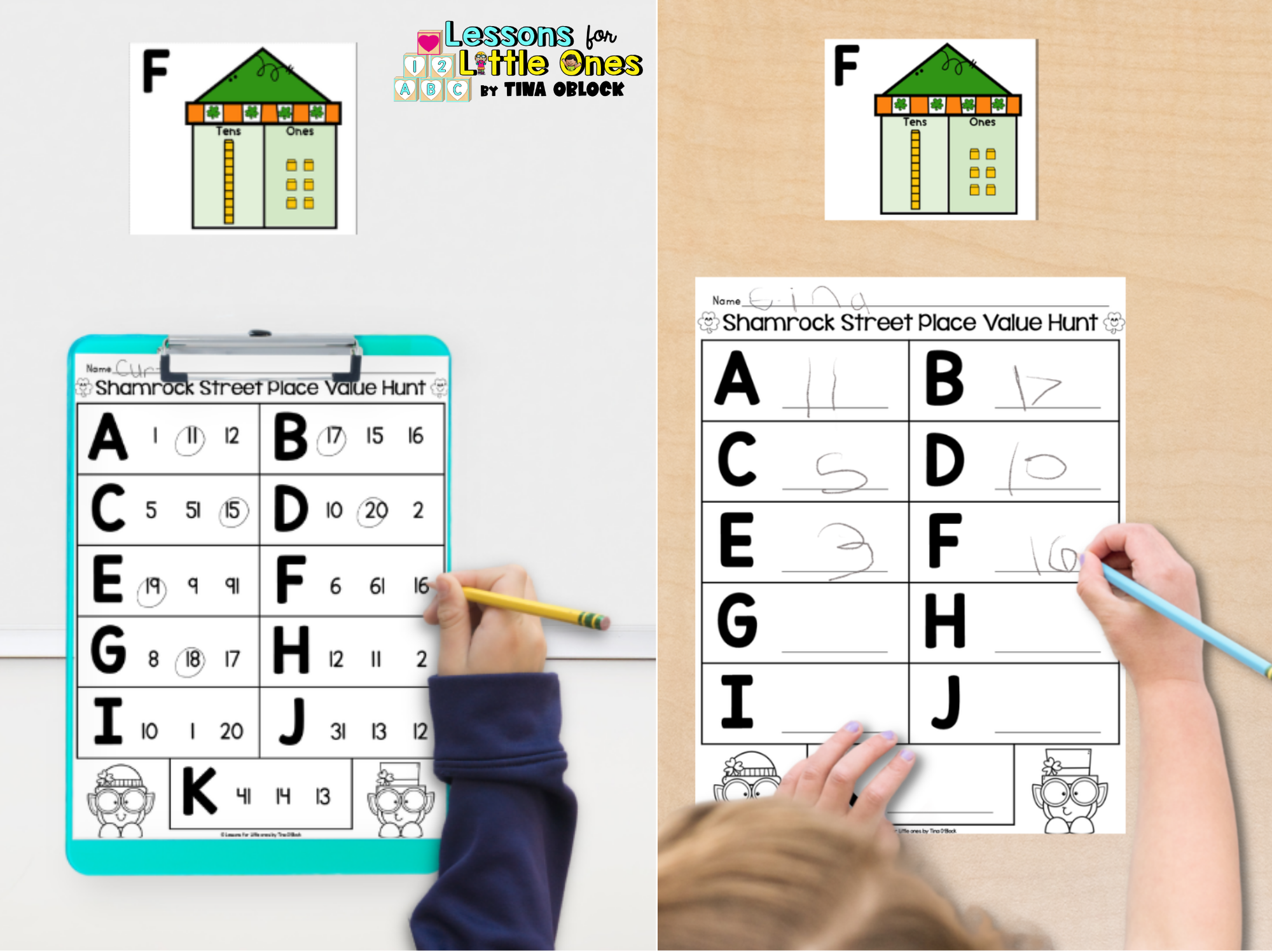
For this count/write the room activity, tell students:
“We are visiting the houses on Shamrock Street in Leprechaun Land! At each house, count the tens and ones. Then, find that house letter on your paper and record the number.”
- Students visit each place value house card.
- They count the base ten blocks inside the house.
- They find the matching letter on their recording page.
- They either:
- Circle the correct number OR
- Write the correct number
Students continue until they have visited all houses.
Why Repeated Practice Matters
Teen numbers aren’t mastered in one week.
Students need repeated exposure.
They need to see:
- 10 is one group of ten.
- 20 is two groups of ten.
- 17 is one ten and seven ones.
Over and over again.
When we spiral this practice across different themes and formats, we give students the repetition they need — without it feeling repetitive.
After hands-on practice and movement, I also reinforce place value digitally.
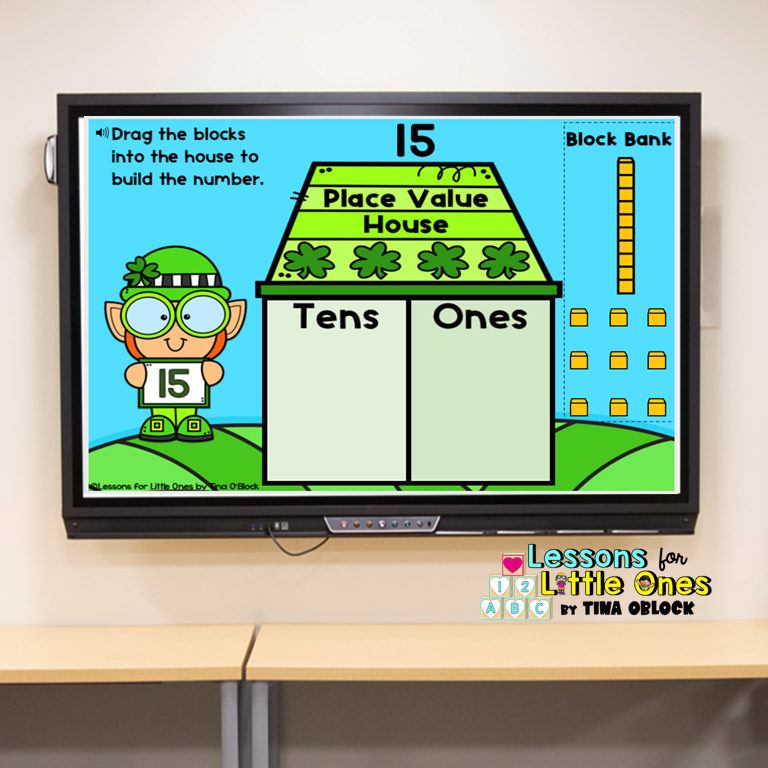
Sometimes we project the Google Slides on the interactive whiteboard and do it together.
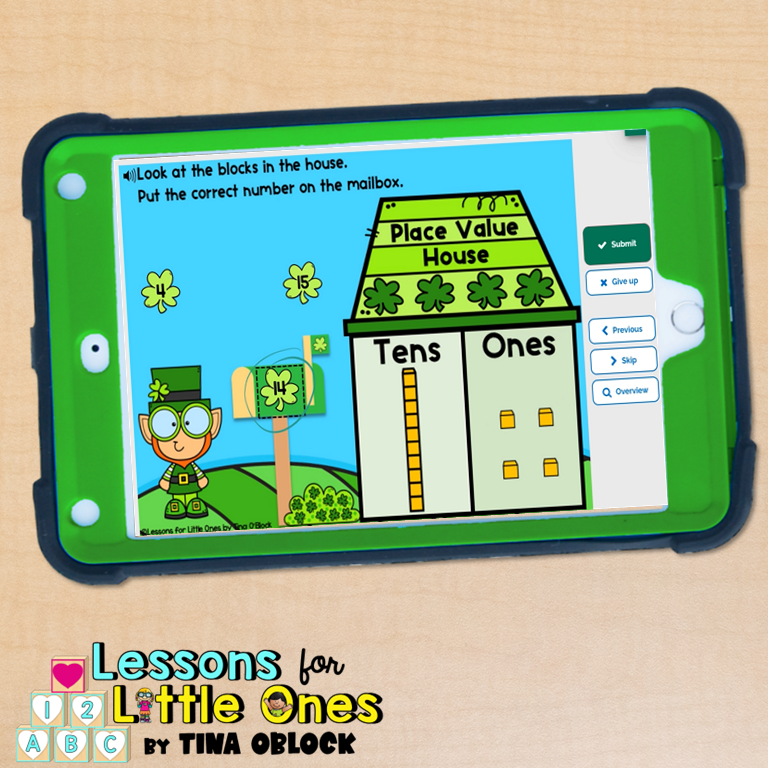
Other times, students work independently at centers using the self-checking Boom Cards.
In one activity, students drag base ten blocks into the house to build a number, just like they did with counting cubes.
In another, they look at the blocks already inside the house and choose the correct number for the mailbox, similar to the count the room movement activity.
It’s the same thinking.
Just a different format.
I also like having simple printable pages ready for:
• Morning work
• Exit tickets
• Small group check-ins
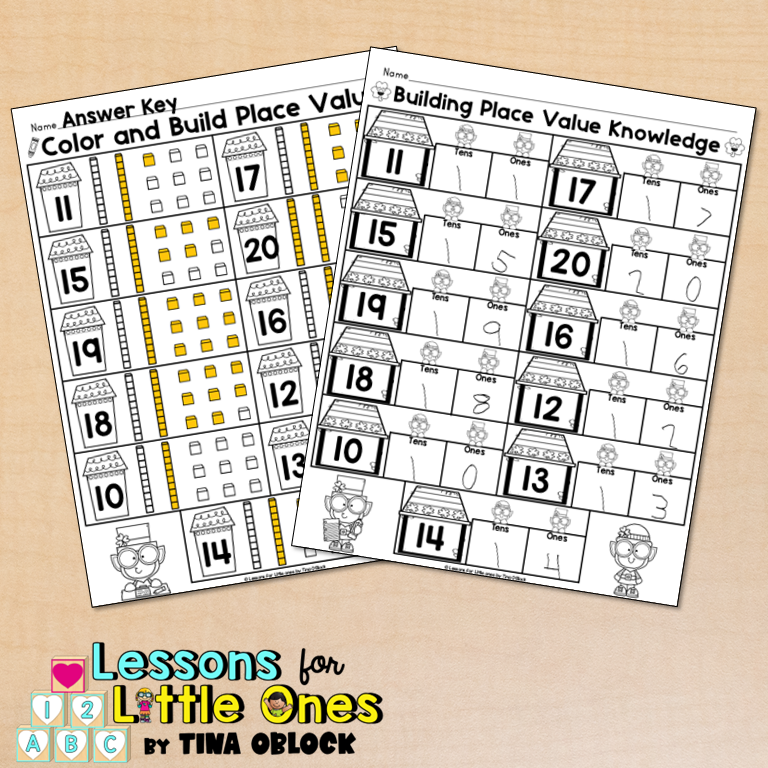
Students color the correct number of tens and ones or write how many tens and ones a number has.
It gives me a fast snapshot of who truly understands that 14 is one ten and four ones — and who might still be counting every block one by one.
Teen numbers are tricky.
But when students can:
Build them
Organize them
Move with them
Talk about them
They begin to understand them.
And that’s what we’re really after.
If you’d like to use these St. Patrick’s Day place value activities in your classroom without having to create everything from scratch, I’ve linked them below.
They’re ready to print, project, or assign digitally — so you can focus on the teaching instead of the prep.
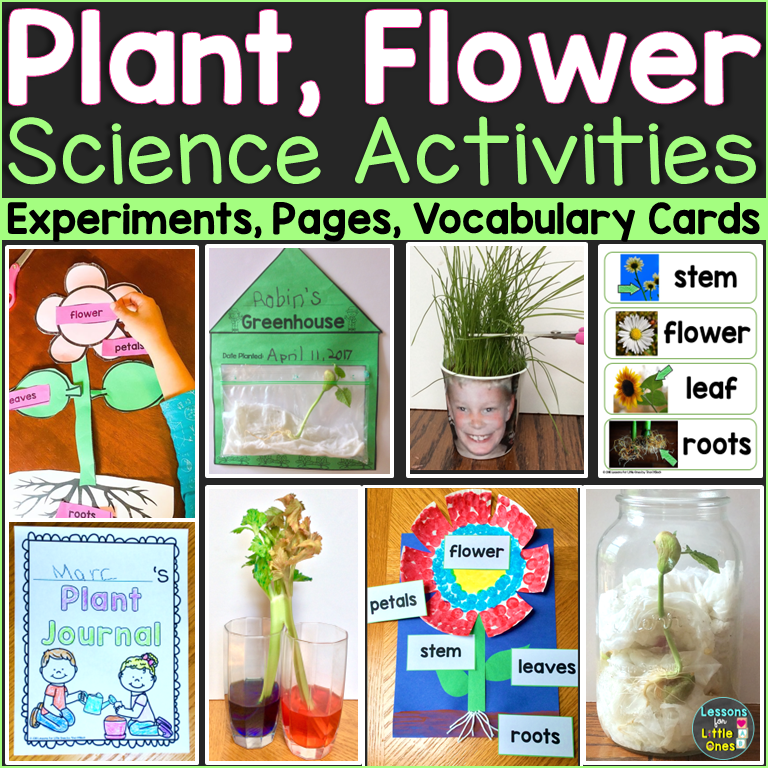
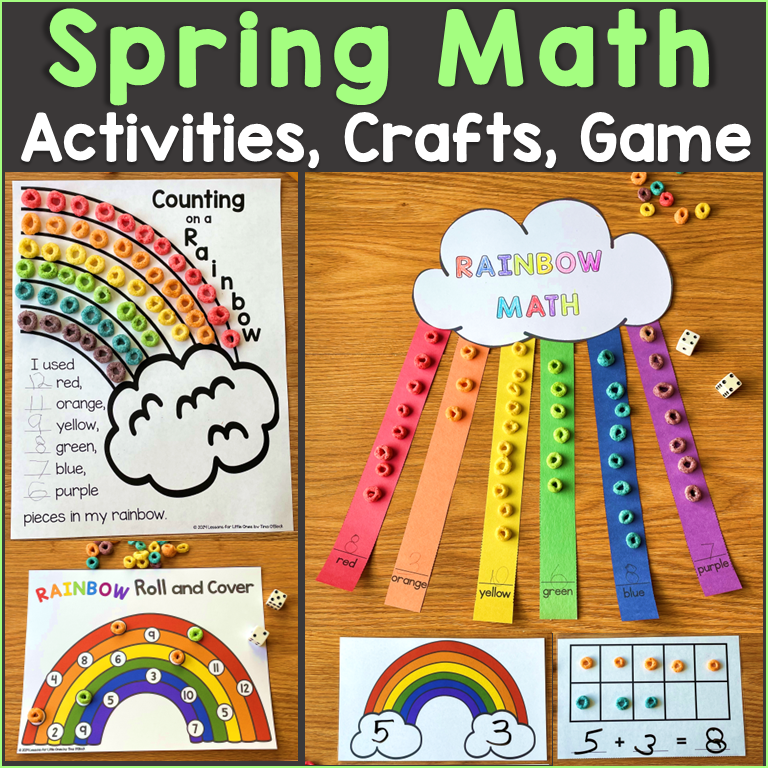
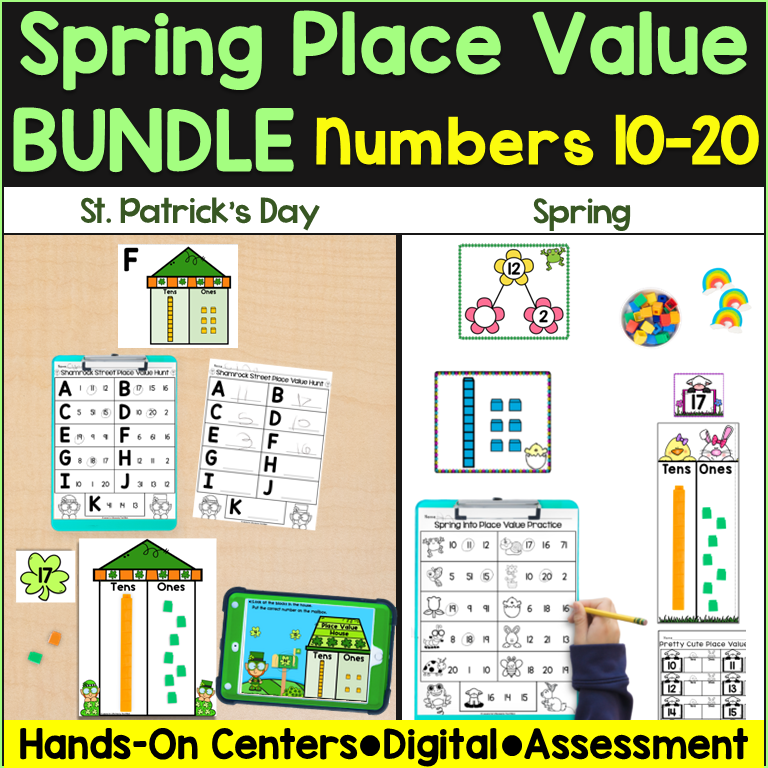
And if you’d like even more seasonal place value practice, I also have a coordinating spring version you can explore as well.
Get St. Patrick’s Day and spring-themed hands-on place value practice in this money-saving bundle!
You may also like:
Spring Place Value Activities for Kindergarten (Teen Numbers Made Concrete) Plus a Free File
Pin it for later!