Why Place Value for Teen Numbers Still Matters in the Spring
By the time spring rolls around, many of our kindergarten students can say teen numbers confidently.
But saying a number and understanding a number are two very different things.
Teen numbers are still one of the biggest developmental leaps we ask our little learners to make.
They look simple:
11, 12, 13… all the way to 20.
But conceptually?
They represent our students’ first real introduction to place value.
If students don’t truly understand that:
14 = 1 ten and 4 ones
then teen numbers remain something they memorize… instead of something they understand.
And memorized math doesn’t build number sense.
Understanding does.
That’s why even in the spring — when we’re reviewing and strengthening skills — I continue to bring place value back to concrete models.
Because repetition matters.
And understanding matters even more.
Making Teen Numbers Concrete (Again and Again)
In my classroom, I always go back to hands-on modeling.
Even in March and April.
We physically build the number.
We make a group of ten using linking cubes or base ten blocks.
We separate tens and ones.
We ask:
“How many tens?”
“How many extra ones?”
“What number does that make?”
Students need to see that teen numbers are made of parts.
That 16 is not just a number word.
It is:
1 group of ten
and
6 ones.
When they build it themselves, something clicks.
Why I Use a Tens and Ones Mat
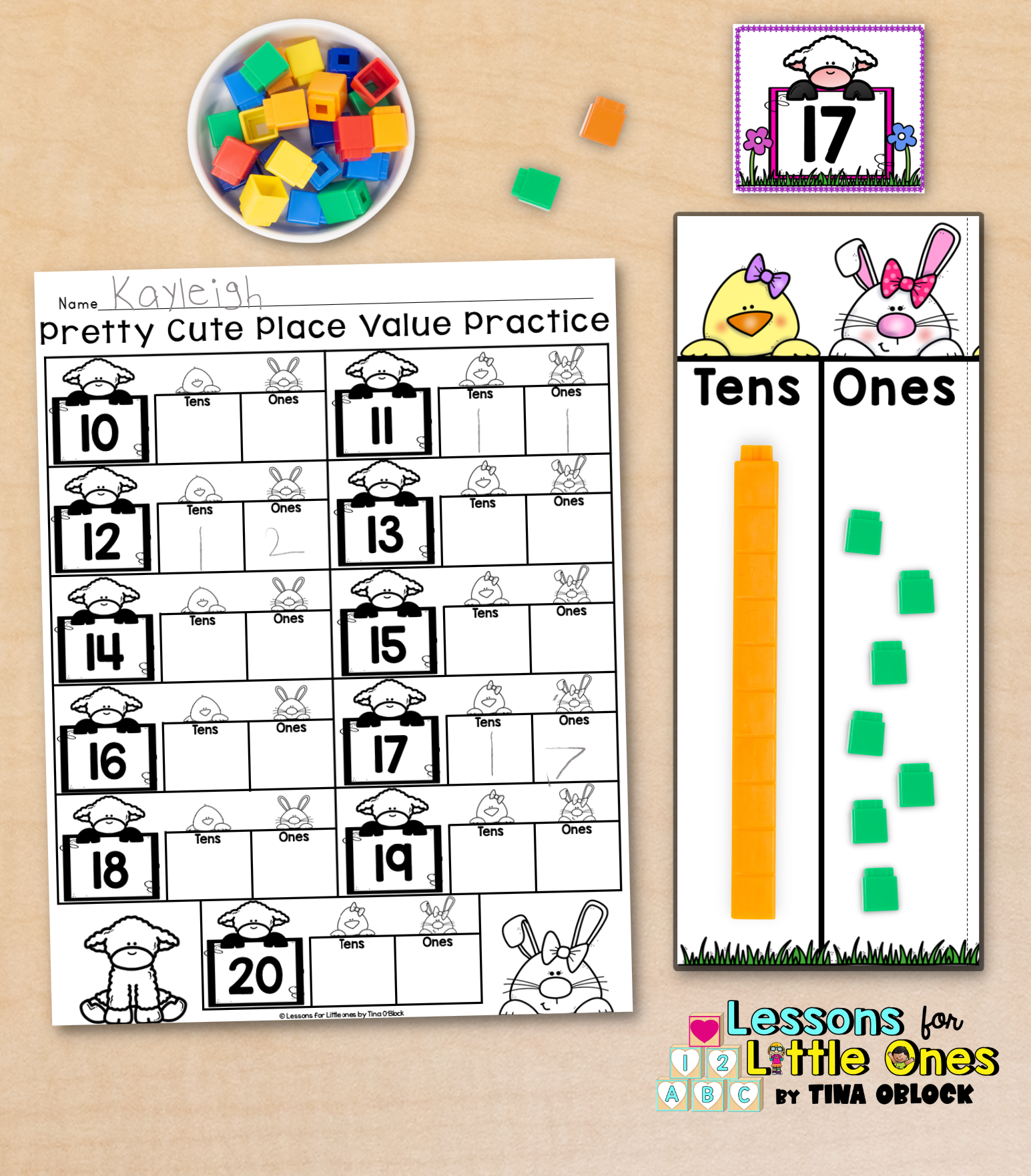
Instead of anything fancy, I like using a clean, clearly divided tens and ones mat.
Two clearly labeled columns:
Tens
Ones
That visual separation is powerful.
When students physically place a tens rod in one column and single cubes in the other, they are organizing the number into its parts.
They begin to see:
19 is not just “nineteen.”
It is:
1 group of ten
and
9 ones.
Sometimes, simple is best.
The clarity of a tens-and-ones mat keeps the focus exactly where it should be — on understanding how teen numbers are built.

Spring Hands-On Center: Build It First
Before we move into movement activities, we build.
Students choose a number task card.
Then they build that number on their mat using:
• Linking cubes
• Base ten blocks
• Or any place value manipulatives you have
They place:
• A tens rod (or a stack of 10 cubes) in the Tens column
• Individual cubes in the Ones column
After building, students can complete the optional exit ticket page.
On that page, they:
• Write the number
• Record how many tens
• Record how many ones
This quick recording piece gives you an instant snapshot of understanding — without needing a separate assessment page.
It connects the concrete model (manipulatives) to the abstract number symbol.
Adding Movement: Differentiated Spring Count the Room & Decomposing Practice
Once students understand how to build the number, we layer in movement.
Because by spring… they need it.
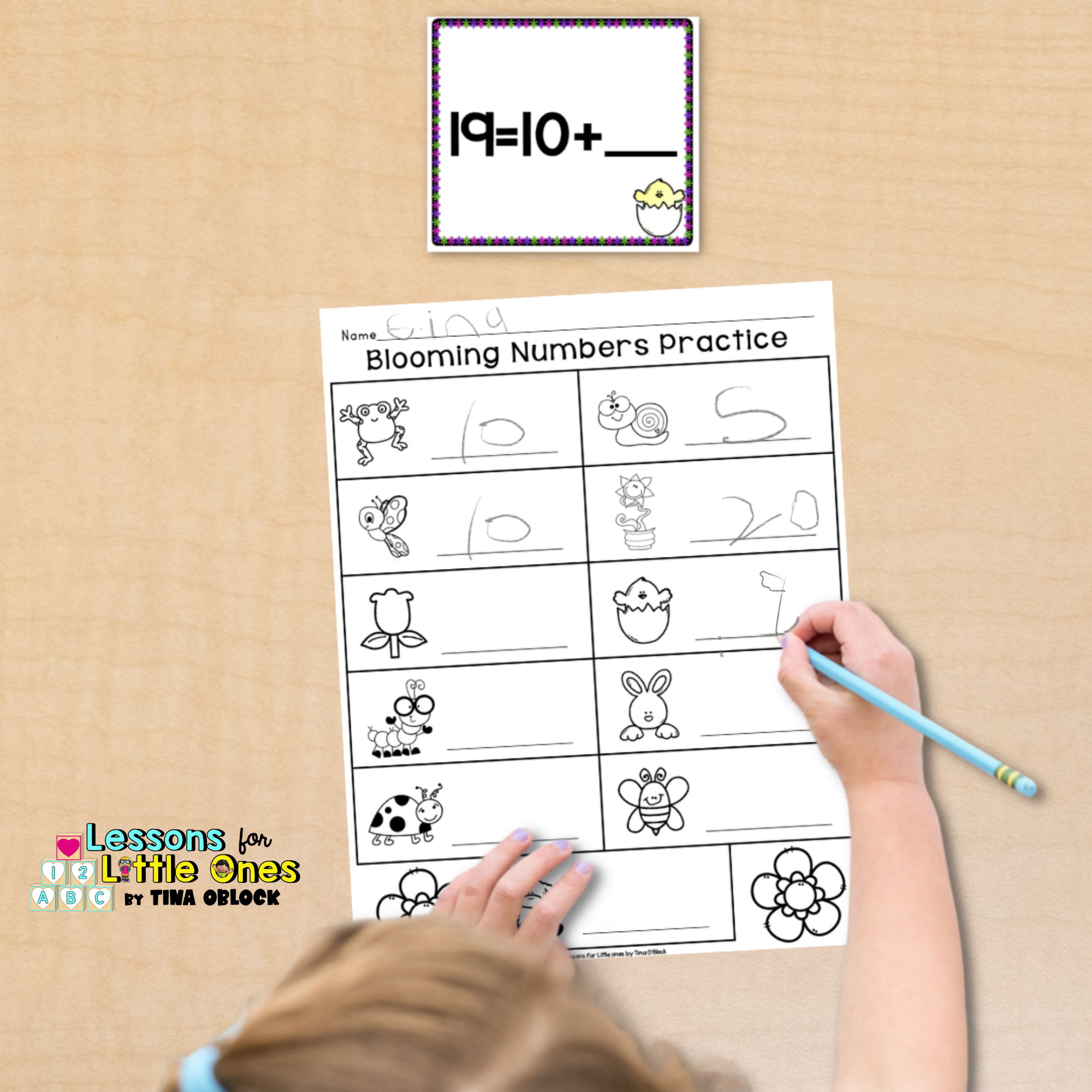
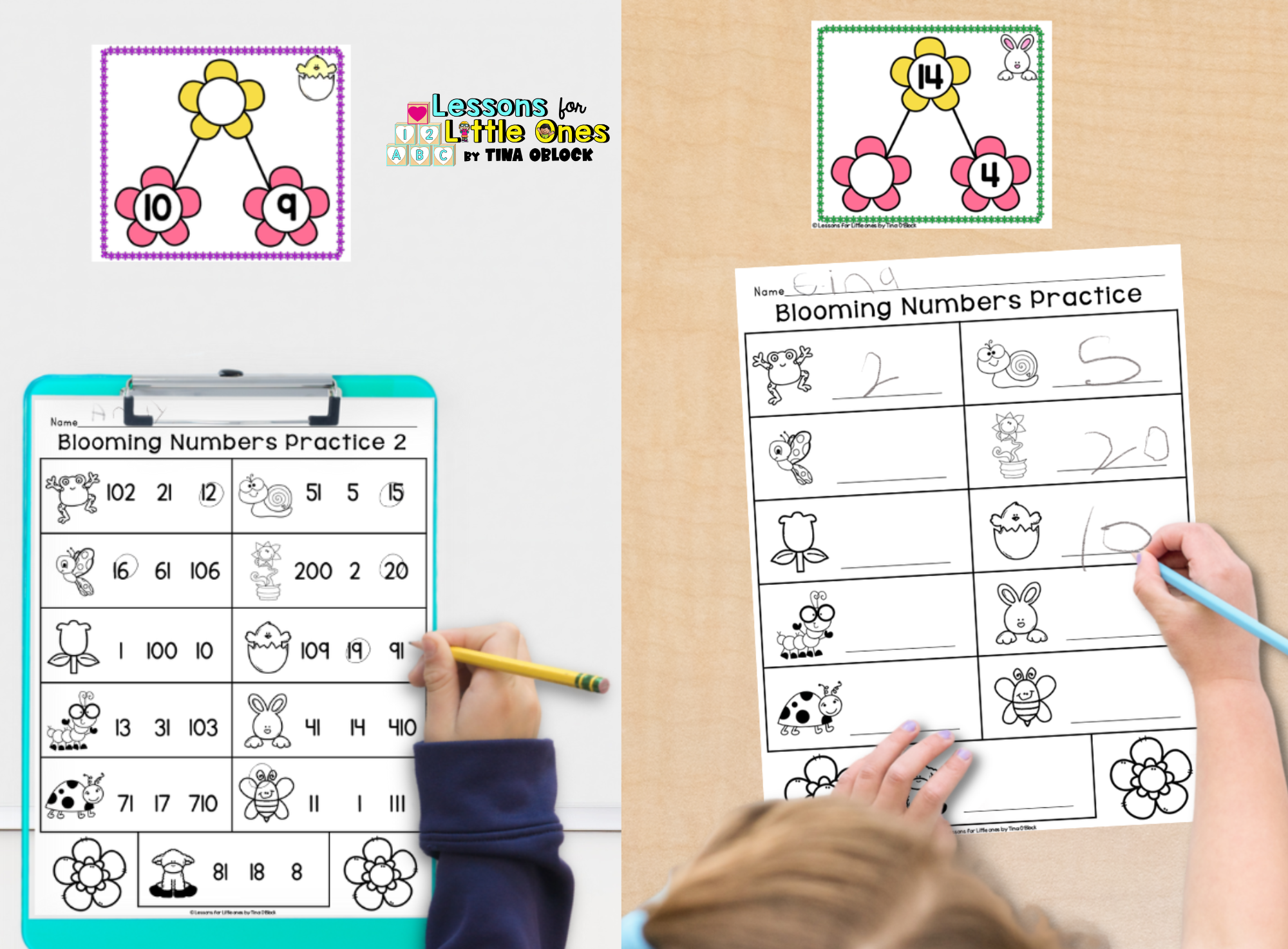
This spring version includes multiple differentiated “Write, Count the Room” / “Scoot” options so it can be easily adjusted for students’ needs.
There are:
• 3 different place value card formats
– Base ten blocks
– Tens and ones representations
– Place value equations
• 3 decomposing teen number sets
– Missing parts
– Missing whole
That means you can switch out cards depending on what your students need to practice.
Students walk to each card, solve it, and record their answers.
And you can differentiate even further by choosing the response sheet that fits each student:
• Circle the correct answer (from 3 choices)
• Write the number independently
Some students need scaffolding.
Some are ready for more challenge.
This makes it easy to support both — without creating separate activities.

Why I Love Spiraling Place Value in Different Formats
Teen numbers are not a one-and-done skill.
Students need to:
Build them
See them
Move with them
Talk about them
Break them apart
Over and over again.
When we revisit place value through different seasonal formats, students get the repetition they need without feeling like they are doing the same worksheet again.
It keeps engagement high while reinforcing the same foundational understanding.
Why Spring Is the Perfect Time to Strengthen Teen Number Understanding
By spring, we aren’t introducing place value for the first time.
We are solidifying it.
We are strengthening it.
We are making sure students leave kindergarten truly understanding what teen numbers represent, not just memorizing how to say them. Because place value is the foundation for everything that comes next.
If students understand that numbers are made of parts, they are ready for first grade math with confidence.
Try It First (Free!)
If you’d like to see how this works with your students before committing to the full resource, I also have a free spring place value sample you can grab.
It includes:
• A set of spring place value cards
• Two differentiated recording pages
• Answer keys
It’s a simple way to try the movement activity in your classroom and see how your students respond.
Then, if you find your students need more differentiation, decomposing practice, or hands-on center work, the full Spring Place Value Pack includes everything ready to go.
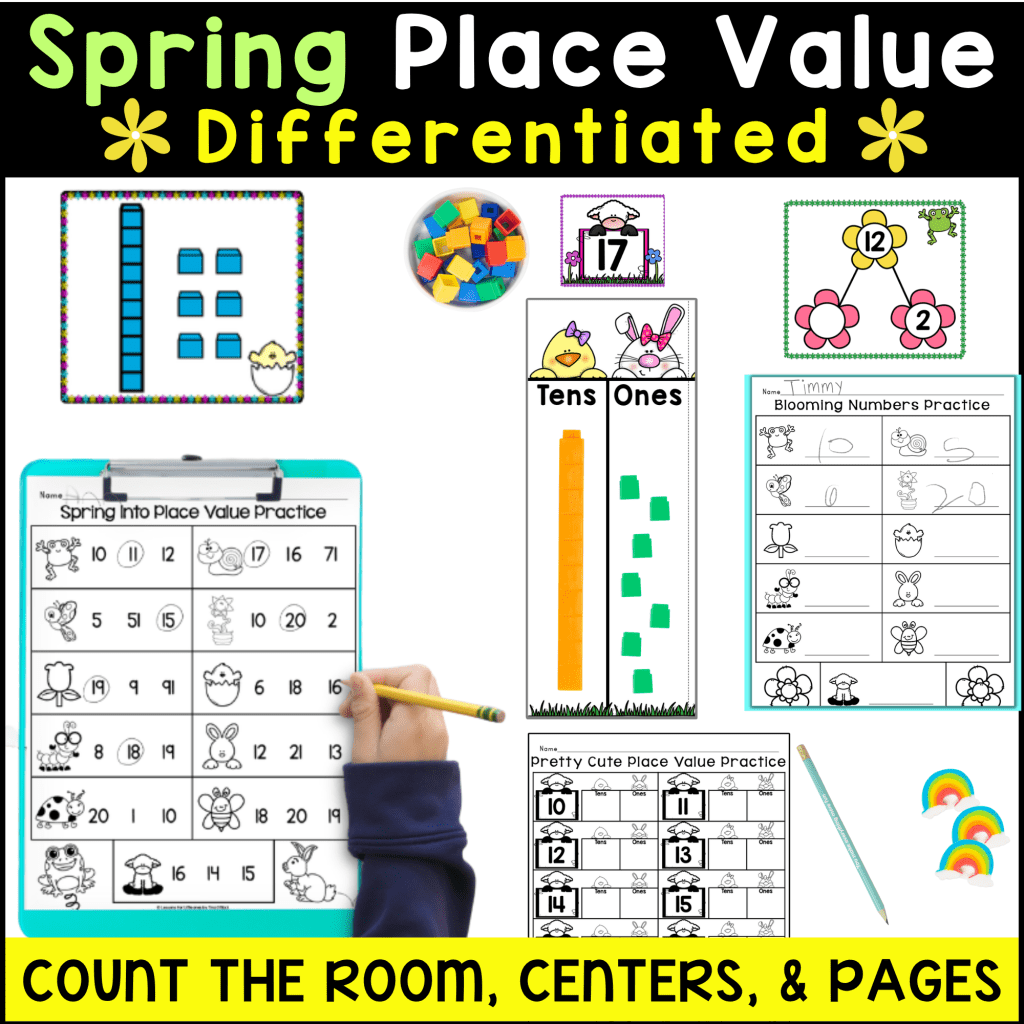
If you’d like to use these spring place value activities in your classroom without having to create everything from scratch, I’ve linked them below.
They include:
• Hands-on place value building mats
• Differentiated count/write the room options
• Decomposing number practice
• Recording pages for accountability
Everything is ready to print and use — so you can focus on teaching, not prep.
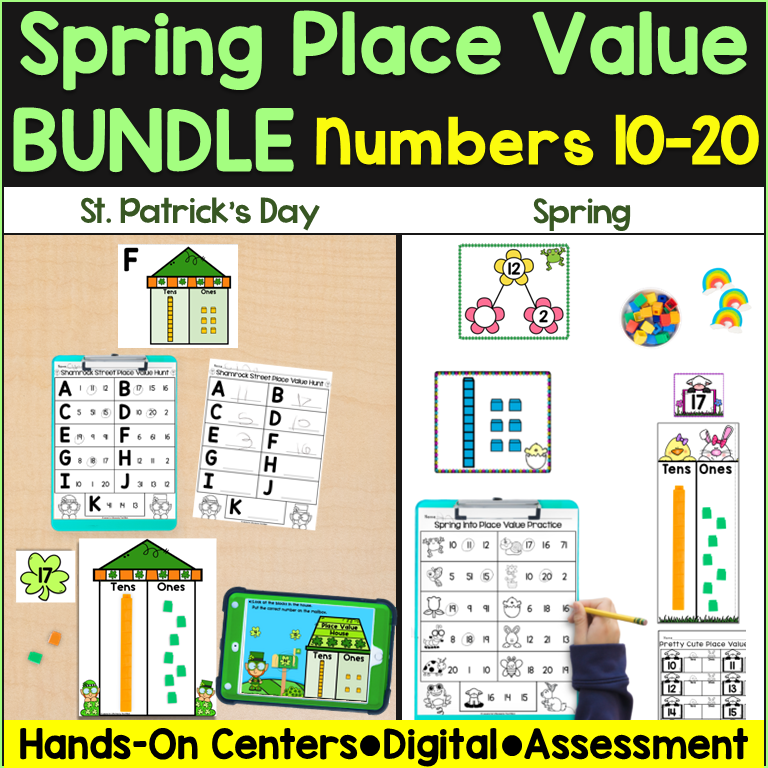
And if you’d like even more seasonal variety, there is also a money-saving Spring Place Value Bundle that also includes a St. Patrick’s Day version that pairs beautifully for continued spiral review.
You may also like:
St. Patrick’s Day Place Value for Kindergarten (Teen Numbers 10–20) Hands-On Practice