Valentine’s Day is one of those weeks when students are extra excited — and while I love all the joy and sweetness, I also know how important it is to keep learning routines strong. Over the years, I’ve found that the best way to do that is by using activities that feel fun and special while still giving students meaningful practice.
That’s why I love using Valentine’s Day color-by-code math activities. Students think they’re just coloring a cute picture, but they’re actually practicing important math skills in a calm, focused way.

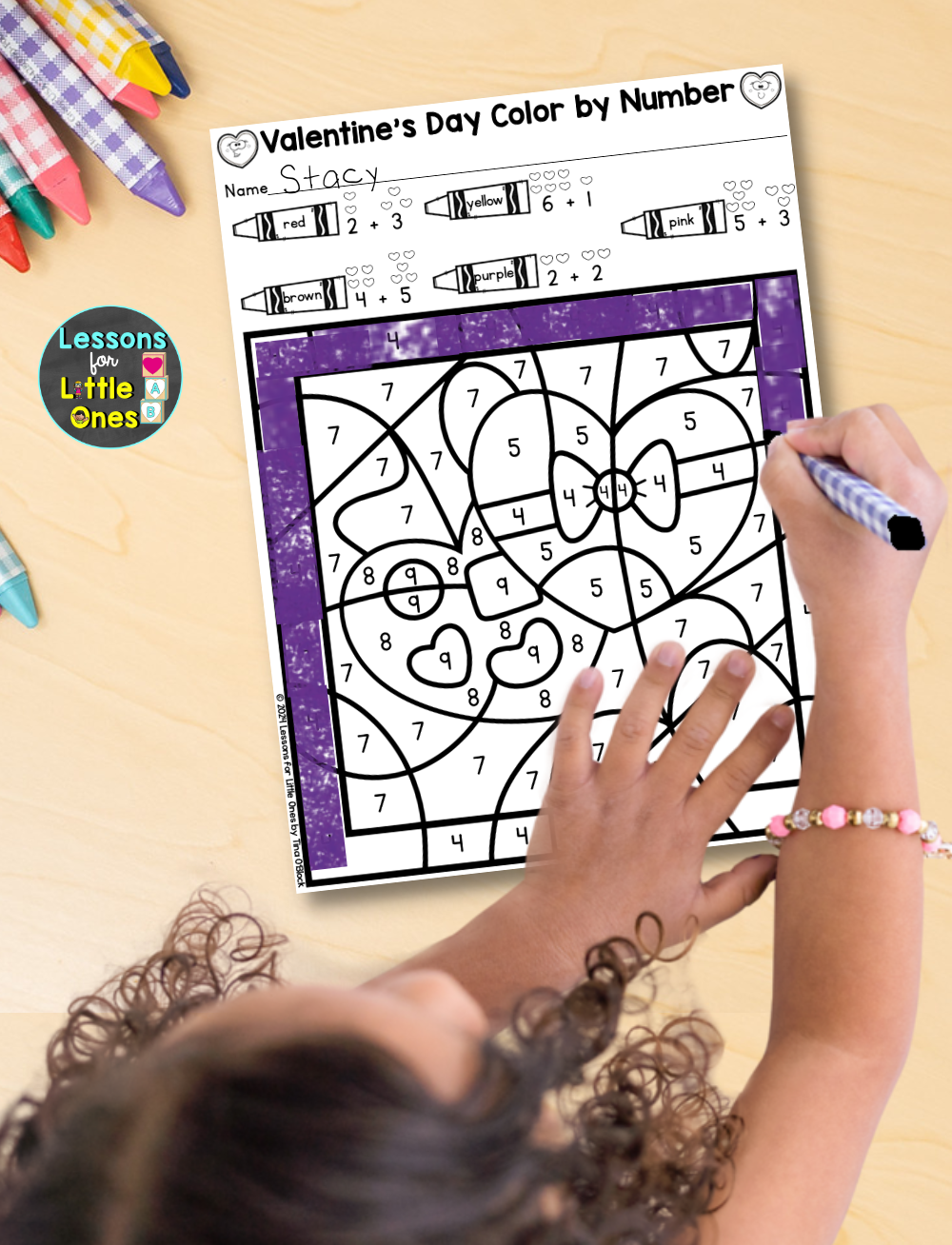
Why Color by Code Math Activities Work So Well for Valentine’s Day
Color by code pages are one of my favorite tools to pull out during holiday weeks. They’re engaging without being overstimulating and give students a clear purpose for their work.
Here’s why they work so well:
- Students stay motivated because they’re revealing a picture
- Math practice feels less intimidating
- Everyone can work at the same time, even at different levels
- Coloring helps build fine motor skills and visual discrimination
- It’s a calming, stress-reducing activity during a busy week
They’re perfect for morning work, math centers, early finishers, small groups, intervention, sub plans, and even Valentine’s Day parties.
Easy Differentiation for Kindergarten and First Grade Math
One of the biggest challenges in a K–1 classroom is meeting a wide range of math needs without making it obvious who is working on what. This is where color by code activities really shine.
This Valentine’s Day set includes 20 differentiated color by code pages, so you can simply choose the skill level that’s best for each student. Everyone works independently, feels successful, and stays engaged — no extra prep required.

Valentine’s Day Math Skills Included in This Color by Code Set
These Valentine-themed color by code pages cover a wide range of foundational math skills for kindergarten and first grade, including:
- Numbers to 10 with ten frames
- Numbers to 20 with ten frames
- Addition to 10 with visual aids
- Addition to 10 (equations only)
- Subtraction to 10 with visual aids
- Subtraction to 10 (equations only)
- Making 10 with visual aids
- Making 10 (equations only)
- Number bonds
- Missing whole (with and without visuals)
- Missing part (with and without visuals)
Answer keys are included, which makes these pages especially helpful for quick checks, small groups, intervention, and substitutes.
Hands-On Valentine’s Day Math Centers Using Candy Hearts
In addition to the coloring pages, this resource also includes hands-on Valentine’s math centers using candy hearts — and students absolutely love them.
These centers give students another way to practice the same math skills while adding movement and interaction to your math block.
The bonus centers include:
- “Sum” Candy Hearts (addition to 10 or 20)
- Candy Hearts Bump Game (addition practice)
- Candy Hearts Cover Up (counting)
- Making 10 with Candy Hearts
- Pattern strips (AB, ABB, and AAB patterns)


Low-Prep Valentine’s Day Math Activities Teachers Can Use Anywhere
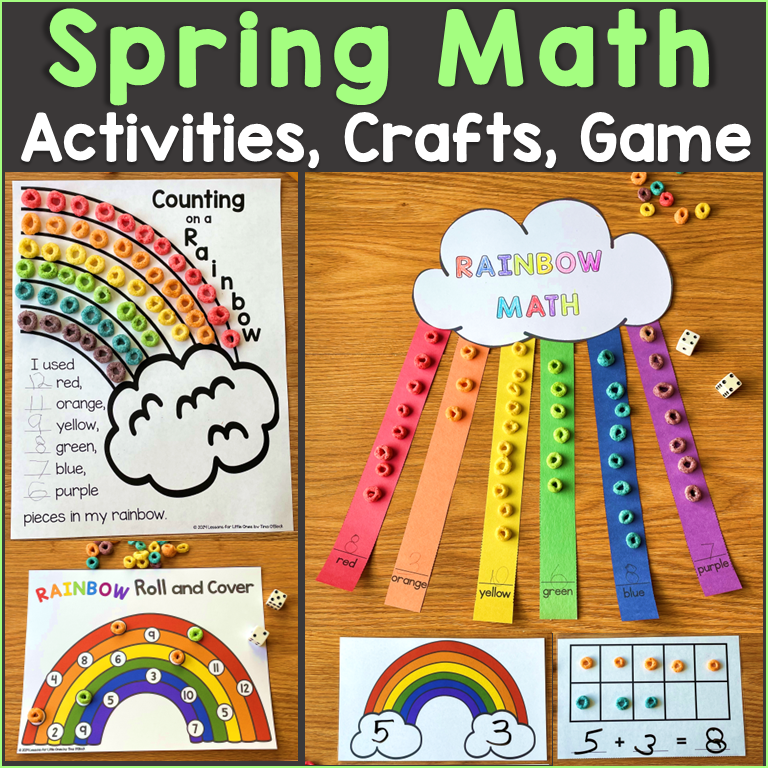
What I love most about these Valentine’s Day color by code math activities is how easy they are to prep and use. You can print them, make copies, and have meaningful math practice ready in minutes.
They work beautifully for:
- Whole-group independent practice
- Math centers and rotations
- Early finishers
- Small groups or intervention
- Sub plans
- Valentine’s Day party activities

A Simple Way to Keep Math Meaningful During Valentine’s Week
If you’re looking for a low-prep, easy-to-differentiate Valentine’s Day math activity that keeps students engaged while reinforcing essential skills, color by code pages are always a classroom favorite.
You can keep routines consistent, meet students at their level, and still make Valentine’s Day feel fun and special.
👉 You can see the full Valentine’s Day Color by Code Math resource and preview pages here:

Pin it for later!