I used to do this cornucopia craft with Trix cereal for years, and it always turned out so cute. My students loved filling their cornucopias with “fruit,” and it made such a colorful, festive display for November. That’s what sparked the idea of extending it into a full math activity — one that’s hands-on, differentiated, and still just as fun.
These Thanksgiving math crafts and centers are perfect for bringing seasonal learning into your classroom while helping students practice key math skills like counting, comparing, graphing, and addition. Plus, the fine motor practice they get from gluing, coloring, and handling the cereal pieces is an added bonus!
Thanksgiving Cornucopia Math Craft
There’s something special about combining art and math — students stay engaged longer and remember what they’ve learned because they’re creating something meaningful.
For this craft, students fill their own cornucopias with Trix cereal “fruit.”
You can easily differentiate the activity depending on your students’ ability levels and the time you have.
This math craft can be used to practice counting and one-to-one correspondence with younger learners, or you can take it a step further and work on graphing and interpreting data.
Here are the 6 ways that I have differentiated the craft for my students. The great part about it is that all the students get to complete the same craft, it’s only the math section that is different.
- Students count and write how many of each fruit they used in their cornucopias.
- Students count and write how many of each fruit they used in their cornucopia, add the numbers, and write the total.
- Students graph how many of each fruit they used in their cornucopias, then use the graph to write the total numbers of each piece.
- Students graph how many of each fruit they used in their cornucopias, then use the graph to write the total numbers of each piece plus how many pieces in all.
- Students graph how many of each fruit they used in their cornucopias, then use the graph to answer most/least and more/less questions.
- Students graph how many of each fruit they used in their cornucopias, then use the graph to answer addition questions.
You can also make simple or more complex cornucopias, depending on the time you have available.
Option 1: Print-and-Go Cornucopia
Students color their cornucopia (optional), glue on the cereal, and complete the math section. This version is perfect if you’re short on prep time or working with younger students. Its main focus is the math.
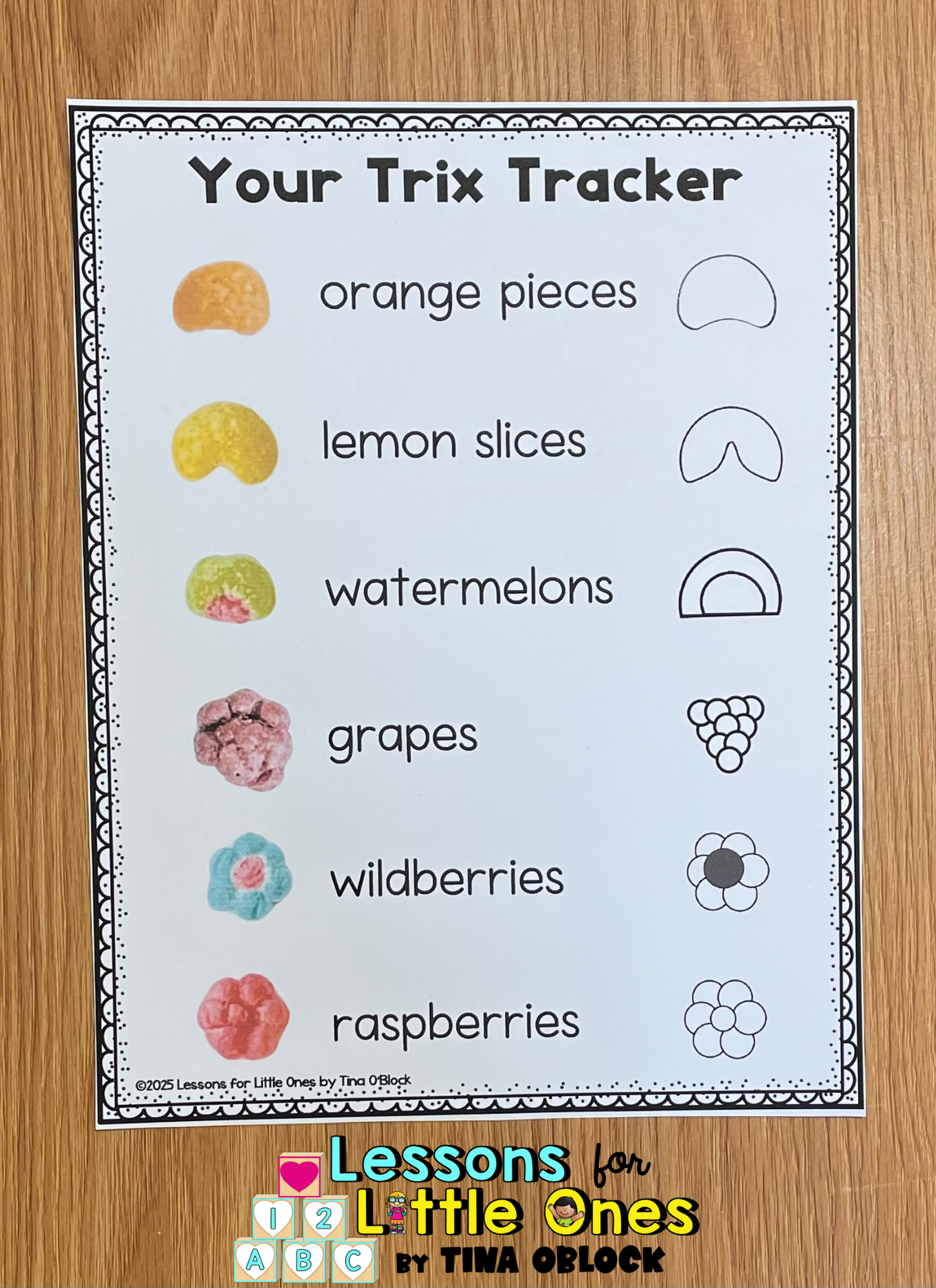
Before starting the activity, I like to review the “Trix Tracker” key with students so they know which cereal matches which fruit picture on their pages before they begin.

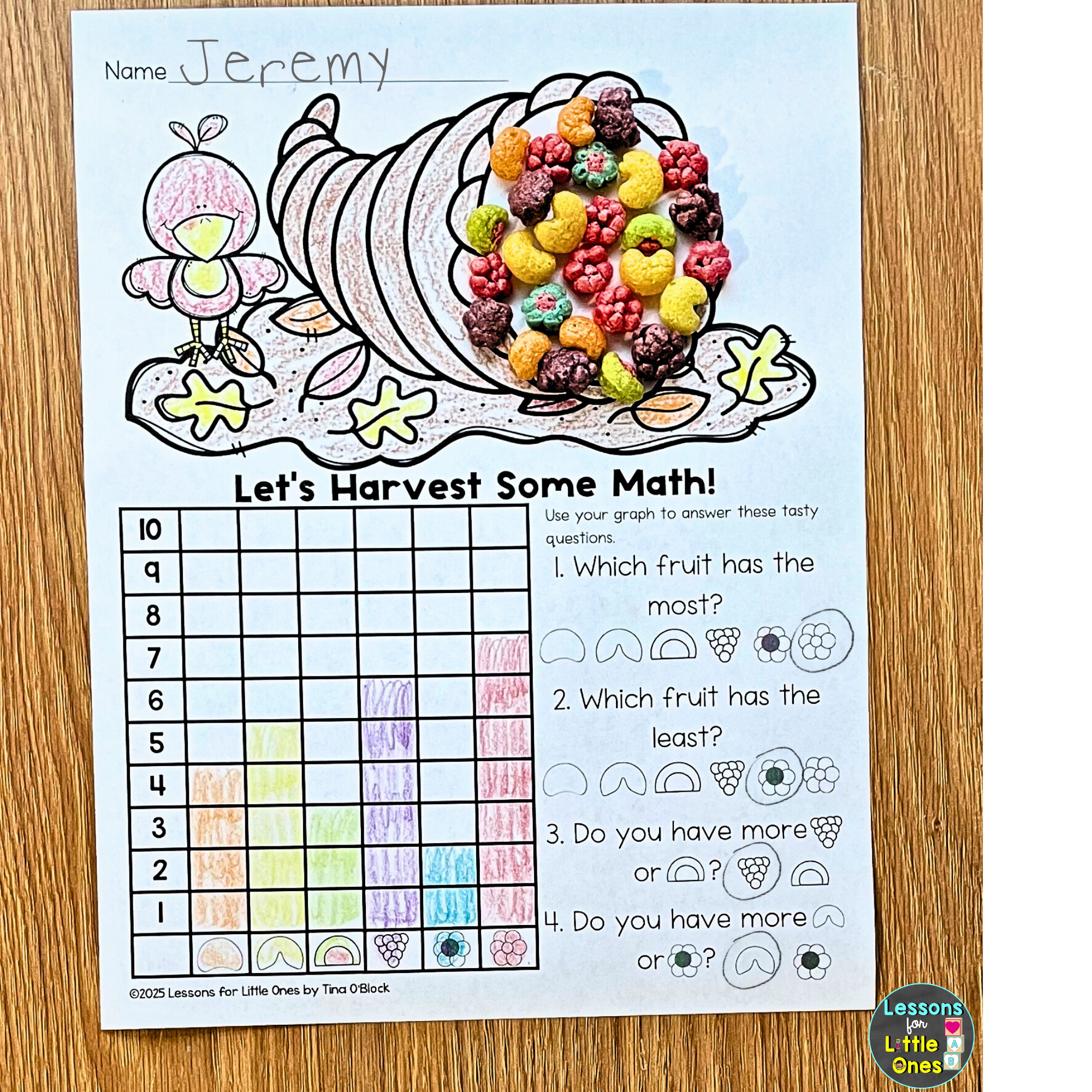
Option 2: Student-Assembled Cornucopia Craft
Students tear small pieces of brown construction paper to “build” their own textured cornucopia before adding the Trix cereal fruit. This version adds cutting, gluing, and tearing practice for even more fine motor work.
After creating their cornucopias, the students complete the math section.
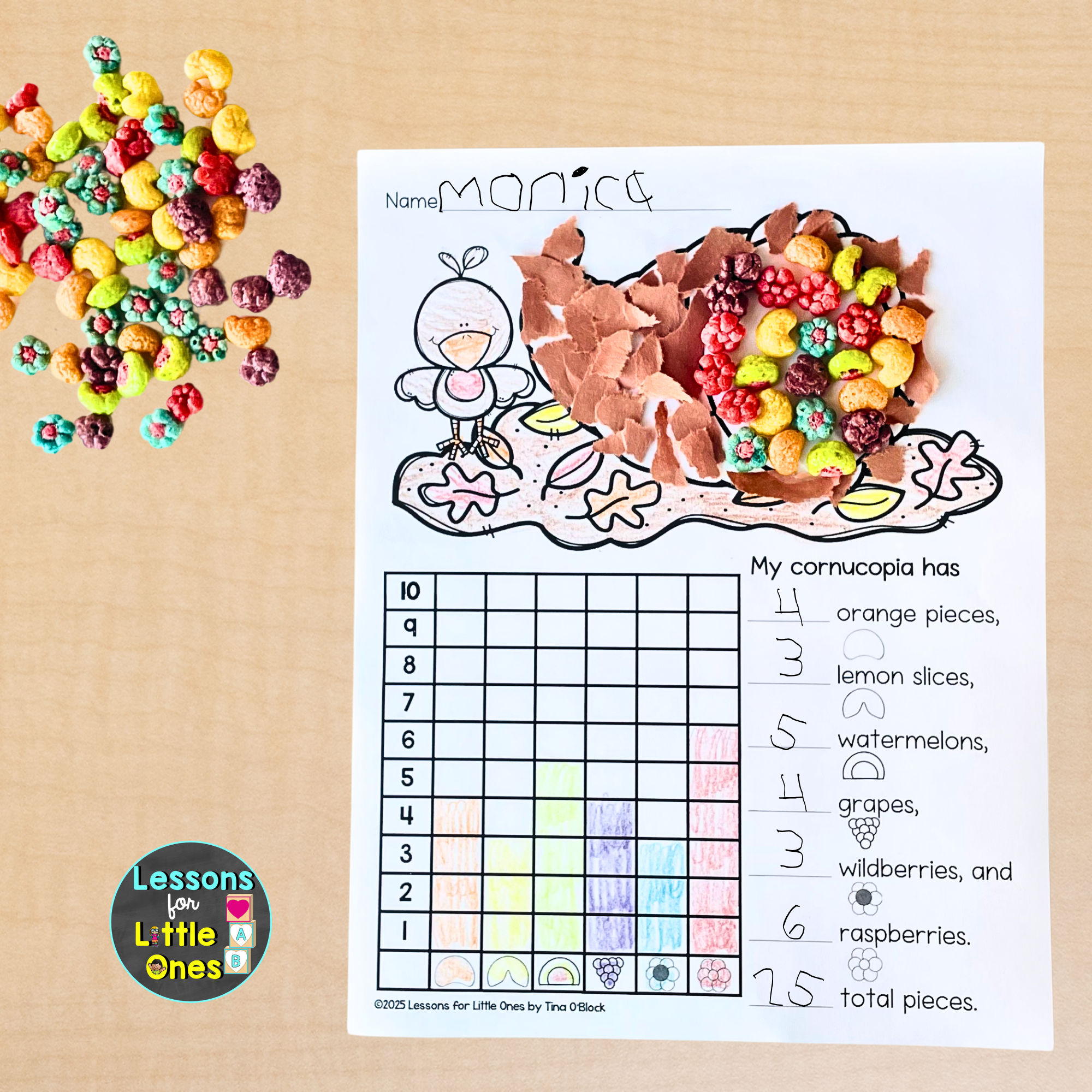
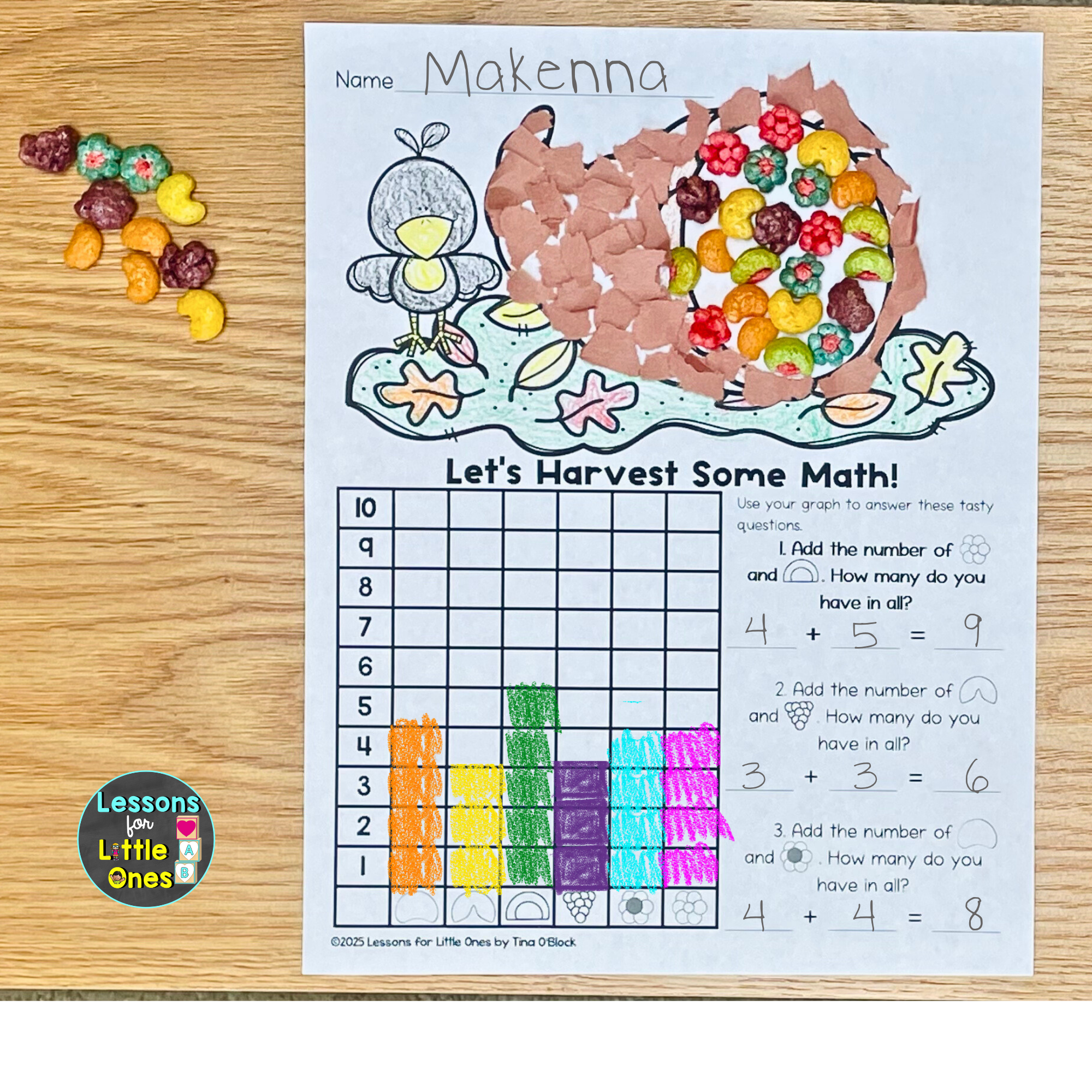
Roll-a-Cornucopia Math Game
If you’re looking for an easy-prep, game-like center activity, the Roll-a-Cornucopia game is a hit. Students roll a die (or two dice for an extra challenge), check the dice guide to see which fruit they rolled, and add that number of cereal pieces to their cornucopia.
After a set number of rolls (five works well for the single die, and 3-5 for the 2 dice option), they count, record, and add up their totals. It’s an exciting way to reinforce one-to-one correspondence, counting, and addition without it feeling like a worksheet.
Differentiation Ideas:
- Use one die (numbers 1–6) for early learners.
- Use two dice (numbers 2–12) for students ready for a challenge and to practice addition.
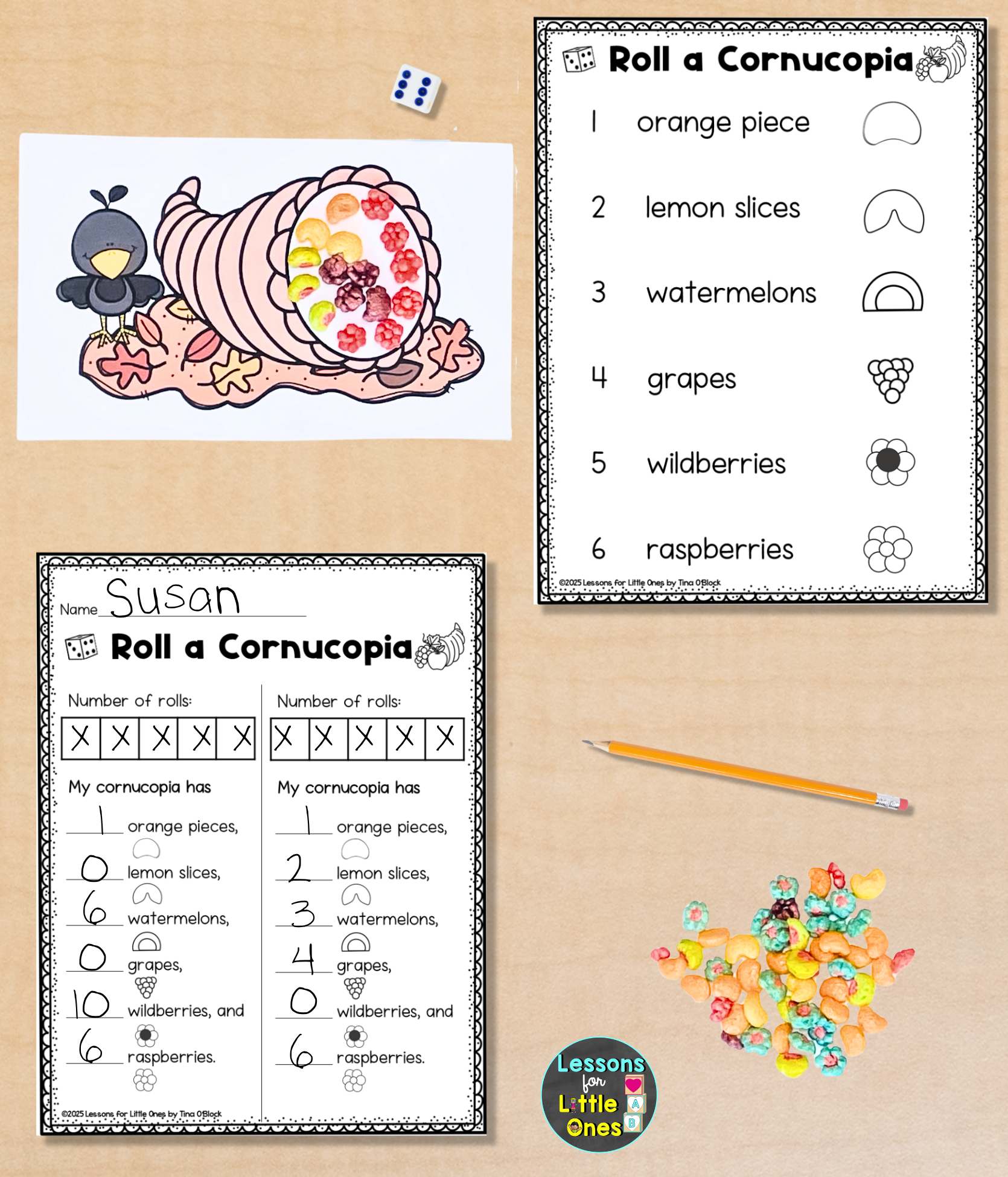

Build-a-Cornucopia Graphing Center
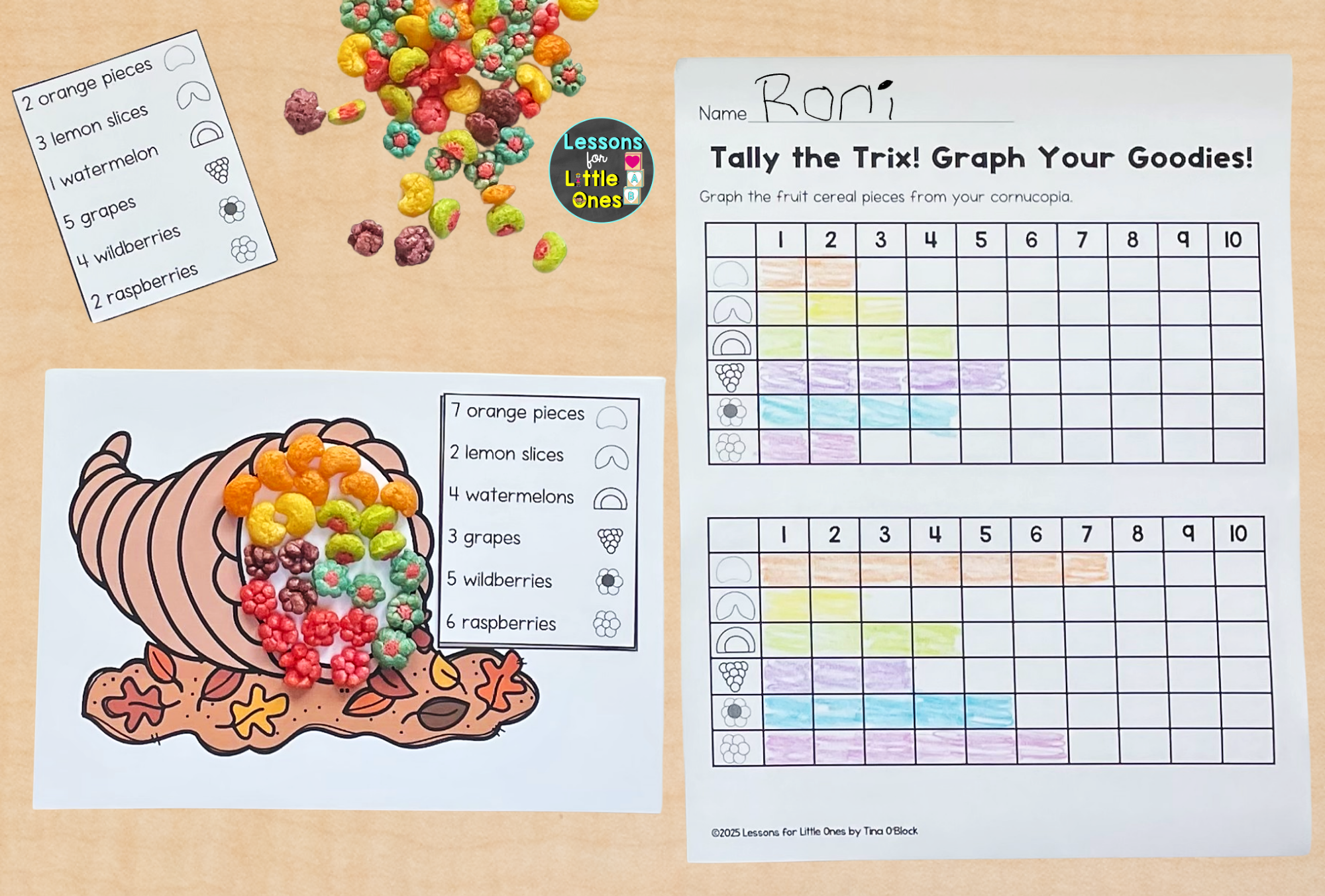
This Thanksgiving math center gives students meaningful graphing practice that feels like play. Students draw or choose a card with directions (for example, 3 oranges, 6 lemons, 4 grapes, etc.), fill their cornucopia accordingly, and then graph their results on a bar graph.
You can have students just practice graphing or take it a step further and practice interpreting their data by having students answer questions such as:
- Which fruit had the most?
- Which had the least?
- How many pieces in all?
You can use the recording sheets as exit tickets, or laminate them for repeated use with dry erase markers. Students can complete one or multiple recording sheets, depending on the time available.
Differentiation Ideas:
- Provide number cards 1–5 for beginners, 1–8 for on-level, and 4–10 for more advanced learners.
- Use the question version of the graphing page for students ready to analyze their data.

Teaching Tip
I like to do the cornucopia craft as a whole-group project (they make a great Thanksgiving bulletin board!) and then rotate the Roll-a-Cornucopia and Build-a-Cornucopia Graphing Center through math stations or small groups.
It’s the perfect mix of creativity, math practice, and seasonal fun — and my students are always so proud of their colorful creations!
Save Prep Time
If you’d like ready-to-use templates, recording pages, dice guides, graphing cards, and differentiated cornucopia crafts, everything is organized for you in my Thanksgiving Cornucopia Math Crafts & Centers resource.
It’s part of my Fall Math Crafts Bundle, which also includes the Apple and Pumpkin Math Crafts. Together, they make it easy to keep your math centers hands-on and engaging all season long.
🍂 You can grab the Thanksgiving Math Crafts & Centers resource here and have your November math planned in minutes!

Pin it for later!