I love teaching about Groundhog Day! Living just a few hours from Punxsutawney, it’s always a big deal in our area — and my students get so excited waiting to see if Phil spots his shadow.
Over the years, I’ve learned that Groundhog Day is the perfect opportunity to combine science, prediction, movement, and hands-on learning in a way that actually makes sense to young students.
Below you’ll find my favorite classroom-tested Groundhog Day activities, including shadow experiments, books, crafts, role play, and writing prompts — all of which are included in my Groundhog Day & Shadows Bundle for teachers who want everything ready to go.
In this post you’ll find the following Groundhog Day activities:
- Shadow Experiments for Groundhog Day
- Shadow Watching & Outdoor Extensions
- Books About Shadows
- Groundhog Day PowerPoint & Interactive Quizzes
- Role Play: Be Punxsutawney Phil
- Wake Up Groundhog! Class Book
- Groundhog Day Crafts & Prediction Activities
- Free Weather Tracking Extension
Shadow Experiments
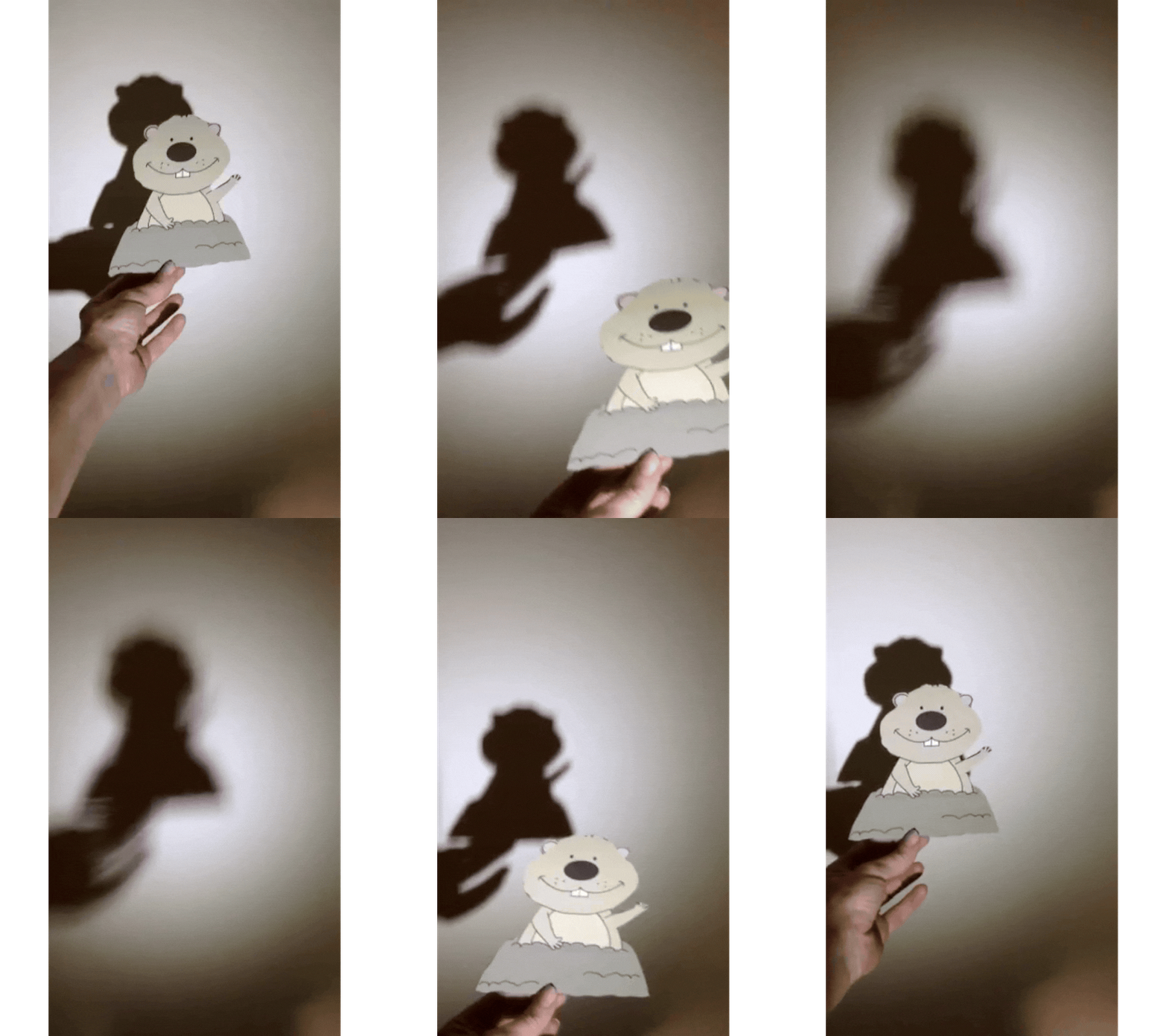
Cut out a groundhog pattern (I use this free one from My Cute Graphics). Dim the lights. Hold up the groundhog pattern. Use an overhead projector or a large flashlight to shine light on the groundhog, so his shadow can be seen on a wall.

Turn off the light. Turn the light back on. Ask the students what is needed to see the groundhog’s shadow? (light source) Explain that when outdoors, the flashlight or projector is the same as the sun.
Cut out a cloud pattern. Place it in front of the light. Ask the students why the groundhog may not see its shadow on Groundhog Day. How will the weather on Groundhog Day affect whether Punxsutawney Phil sees his shadow? (If it is sunny, he will see his shadow; if it is cloudy or overcast, he will not see his shadow)

Next, ask questions such as what shape is the shadow? Does the light shine through the groundhog? Explain that the groundhog blocks the light, which makes a dark spot or shadow. Turn and move the puppet and ask students what happens to the shadow to see if they can understand that the shadow moves the same as the puppet.
Allow students to come up and make shadows of their own. Then, ask them how they can make the shadow bigger and see if they can discover that when they move farther away from the light, the shadow gets smaller, and when they are closer to the light, the shadow is larger.
For an added challenge, show some clear or translucent objects such as clear plastic or plastic containers. Ask students how these shadows look different than the groundhog shadow and why (they are not as distinct).

Have students record what they know (what they have learned) about shadows.

Shadow Watching
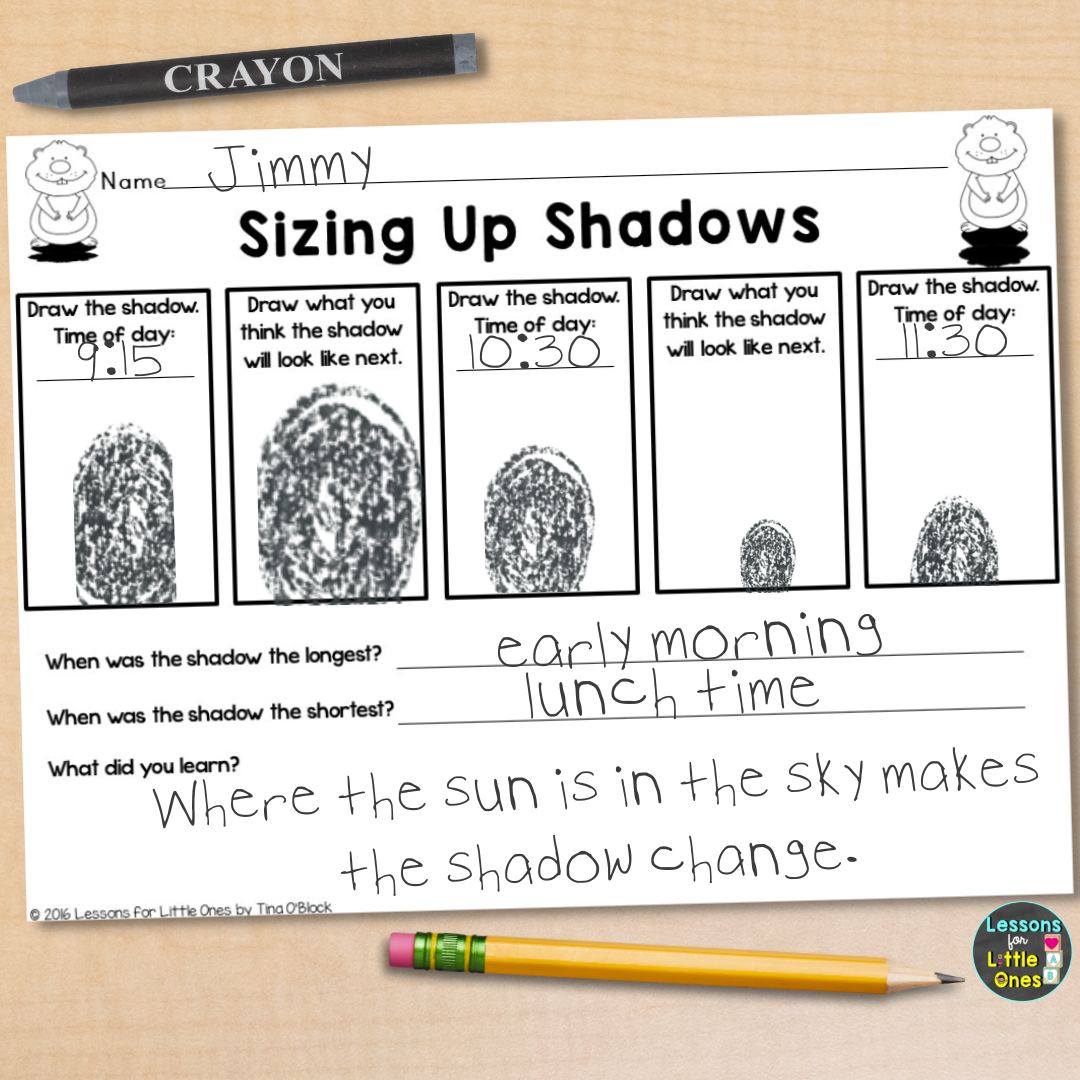
This experiment shows how the time of day affects a shadow’s length. Make a simple sundial by inserting a pencil or straw into a ball of clay and attaching it to a sheet of poster board. Attach the groundhog pattern to the pencil or straw.
Take it outside on a sunny day, first thing in the morning. Mark the shadow and make note of where the sun is in the sky.

Do this at certain intervals throughout the day and have students predict where they think the shadow will be each time. Ask students to draw conclusions as to what they observed (the sun’s position in the sky affects a shadow’s length; it is longer when the sun is low in the sky, shorter when the sun is high in the sky).
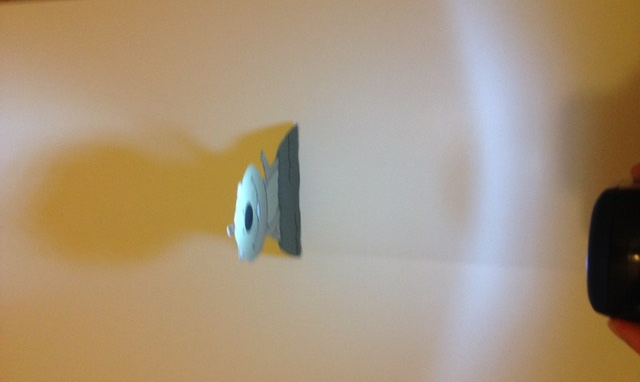
If you can’t do this outdoors, you can do it indoors with a flashlight to represent the sun. Set it up the same way and shine the flashlight on the groundhog from different positions (or allow the students to experiment with the flashlight on their own and draw conclusions).


Have students record their observations and write what they learned (draw a conclusion).
If the weather permits, take students outside and see if they can see their own shadows. A fun game to play is Shadow Tag. It is played like regular tag, except the person who is “it” must step on a child’s shadow instead of tagging or touching them. It is a great way for students to manipulate and move their shadows.
Books about Shadows
Here are some favorite books about shadows:
What Makes a Shadow? (Let’s-Read-and-Find-Out Science 1)


Groundhog / Groundhog Day Activities
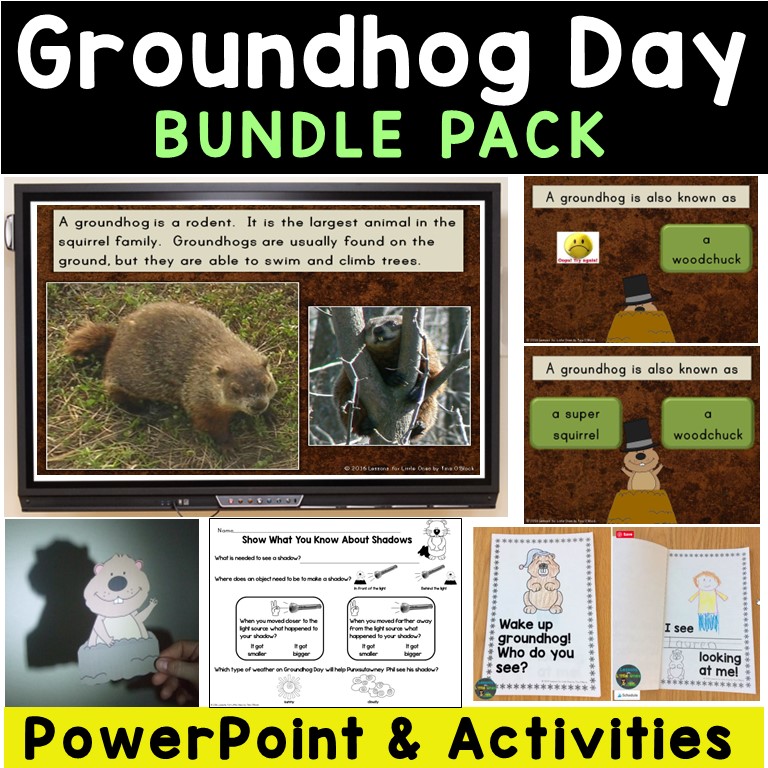
Now that students have a basic understanding of shadows, we learn about groundhogs. I use an interactive Groundhog Day PowerPoint presentation to introduce groundhogs, their habitat, and the tradition of Groundhog Day in kid-friendly language with real photos so they can see what the actual animal looks like.
This PowerPoint (along with interactive quizzes and printable follow-up activities) is part of my Groundhog Day & Shadows Bundle, which makes it easy to teach this topic over several days without extra prep.


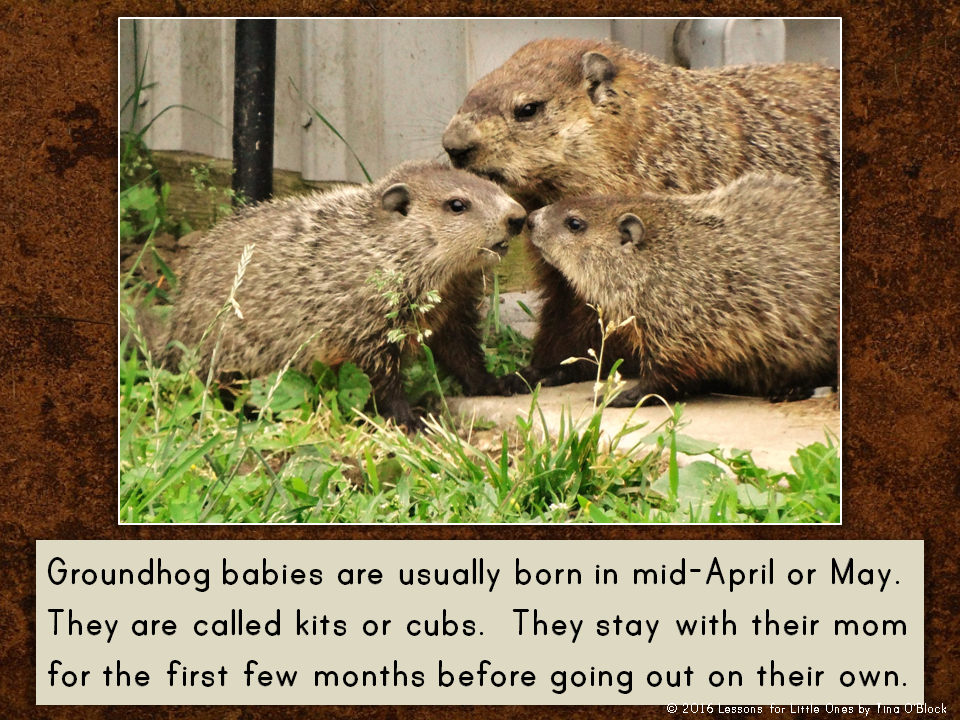
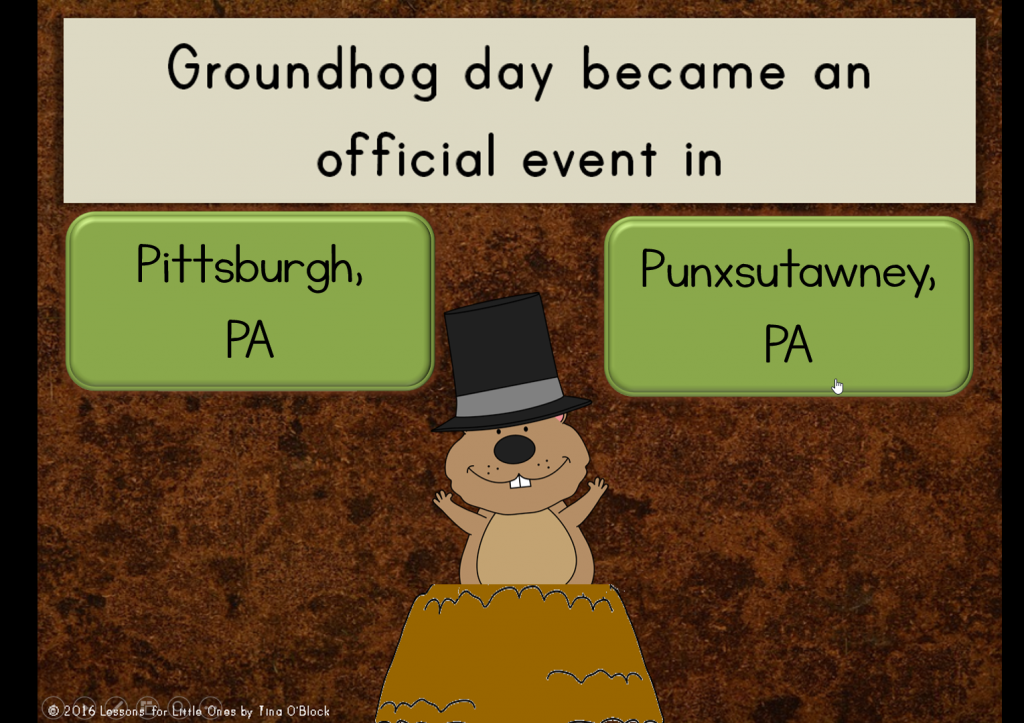
Next is a student favorite! We do an interactive quiz to see what they learned about groundhogs. They have to answer the question correctly in order to get the groundhog to come out of his burrow. Here is a short video:
Then we learn about the history of Groundhog Day and how it is still celebrated today in Punxsutawney and do another interactive quiz with the groundhog.


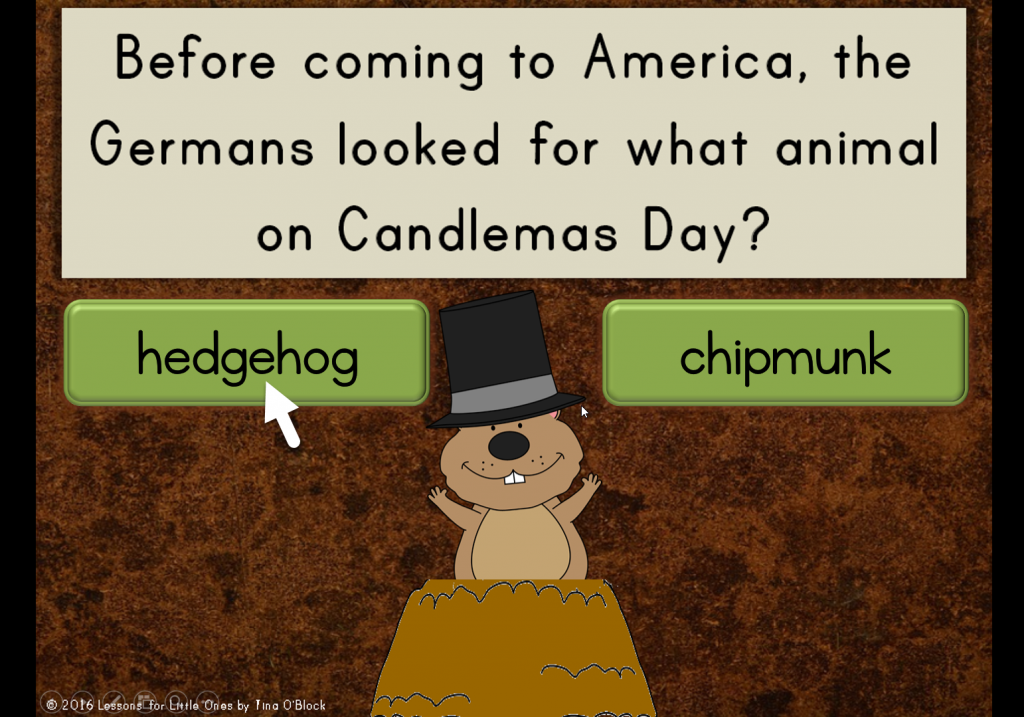
There is also a section that reviews what we learned about shadows.


Role Play Activity
This is a fun way to check students’ understanding of shadows and what happens on Groundhog Day. Allow students to role-play being Punxsutawney Phil on Groundhog Day.
To make his burrow, drape sheets or blankets over a desk. Dim the lights.
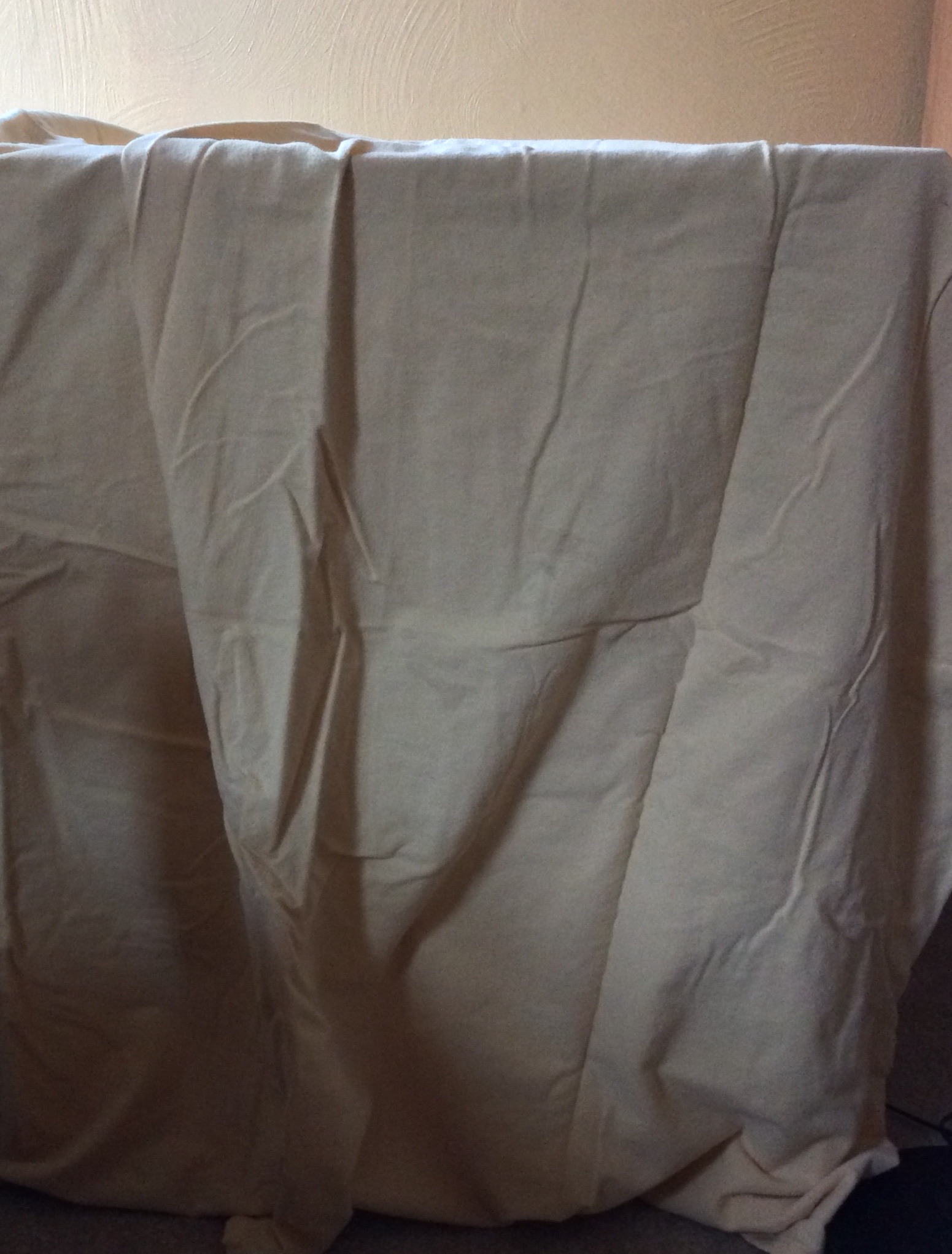

Students take turns crawling into the burrow. On your signal, they crawl out and stand up. Alternate shining the light on them or keeping it off. Have the student state his or her prediction (6 more weeks of winter if the light was on and they see their shadow or an early spring if the light was off and they do not see their shadow) and act it out (go back in the burrow if they see their shadow or stay out and go look for food if they do not see their shadow).
Afterward, I have students complete this simple cut-and-paste page.

Wake Up Groundhog! Class Book
This is a nice keepsake that students enjoy reading even after Groundhog Day is over. It is similar to Brown Bear, Brown Bear, What Do You See? by Bill Martin Jr. / Eric Carle. All eyes will be on the groundhog on February 2nd, awaiting his prediction. This emergent reader uses simple, repetitive text to say that your class will be looking at the groundhog.
Each student colors a “Wake up groundhog” page and draws a picture of themselves and writes their name on an “I see” page. Put all the pages together to form a class book (pages alternate – Wake up groundhog! Who do you see?, I see (student name) looking at me!, Wake up groundhog! Who do you see?, I see (student name) looking at me!, etc. ). The last page can say, “I see the whole class looking at me! “ Take a picture of the class for this page.


Groundhog Day Books
Here are some favorite books about Groundhog Day:
Groundhog Grace: A Rhyming Verse Read Aloud Picture Book for Kids Celebrating Groundhog Day

The Night Before Groundhog Day
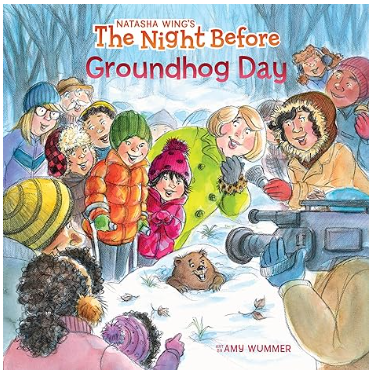
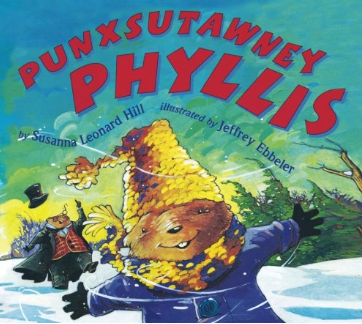
Wake Up, Groundhog! (Little Golden Book)

Will Spring Be Early? Or Will Spring Be Late?

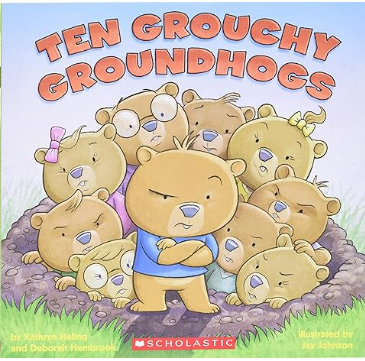

Scholastic Reader Level 1: Groundhog Day

Groundhog Day Predictions Crafts & Writing Prompt
Once students understand what the groundhog’s prediction means, it’s the perfect time to let them make a prediction of their own.
In my classroom, I love using hands-on Groundhog Day crafts paired with prediction writing so students can explain their thinking in a concrete, meaningful way.
One option is a groundhog shapes craft, where students build a groundhog using simple shapes and then write what they think will happen on Groundhog Day.
Another favorite is a paper plate groundhog burrow craft, where the groundhog pops out of the burrow and students attach their prediction writing. This craft is especially engaging and makes an adorable classroom display.
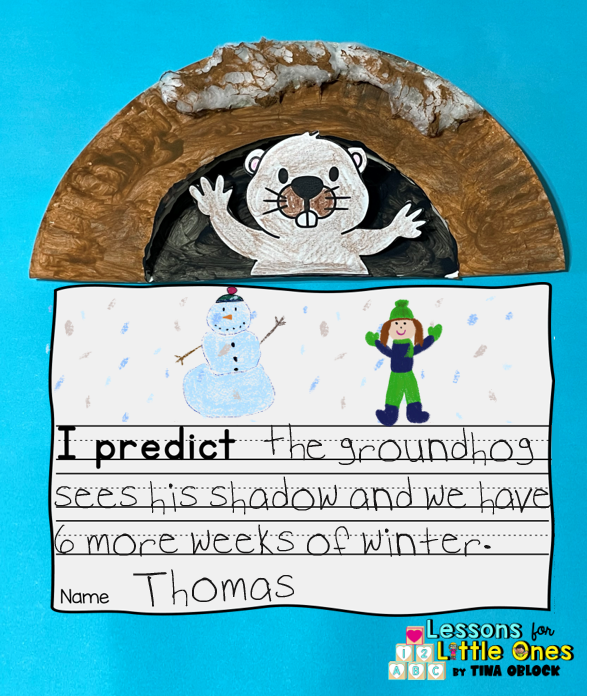

Both of these crafts (along with prediction writing templates and bulletin board letters) are included in my Groundhog Day & Shadows Bundle, making it easy to tie writing, science, and seasonal learning together without extra prep.

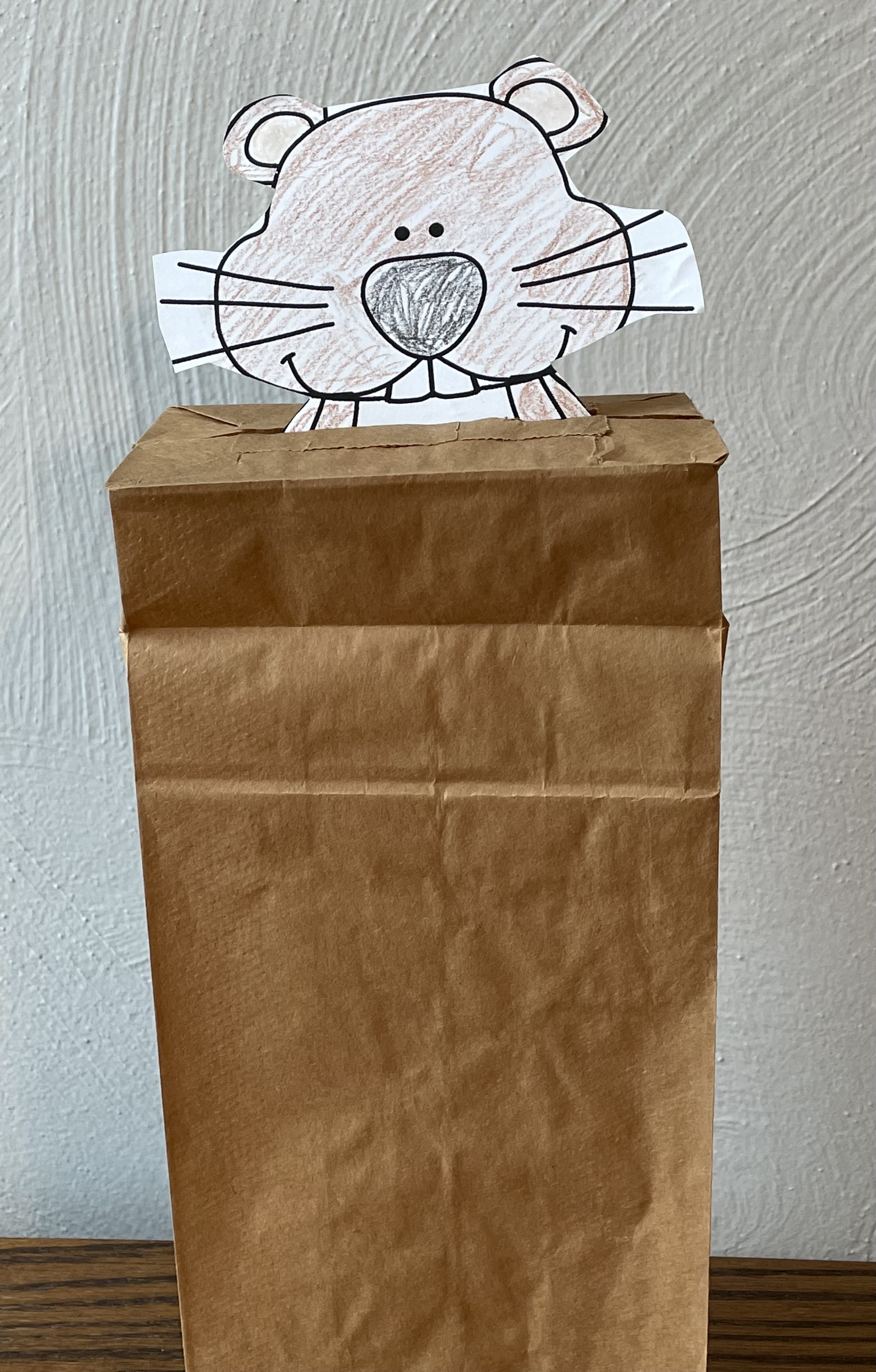
Groundhog Puppet – Use the patterns below to create a groundhog puppet. Have the students color the groundhog and burrow pattern and cut them out. Help the students cut the hole in the burrow along the dotted line. The dotted line should be cut enough to allow the groundhog to go up and down with ease. If you do not wish to use the burrow, a brown paper lunch bag can be used instead. Cut a slit in the bottom of the bag large enough for the puppet to go up and down with ease. Glue a craft stick to the back of the groundhog and insert it through the hole in the burrow. Demonstrate how to make the groundhog peek out of his burrow to check for his shadow. Students can take turns holding their puppets in front of the flashlight or overhead projector.


You can also use a paper bag.
Video Replay of Punxsutawney Phil’s Prediction
Since Phil makes his prediction before we get to school, I show the video replay from the official website:
Official Website of Punxsutawney Phil Groundhog Club
They also have a Teachers page with fun lessons, coloring pages, & a groundhog cookie recipe.
Post Groundhog Day Activity
Don’t let the excitement about Groundhog Day end on February 2nd! Why not keep track of the weather for the next 6 weeks and see if Phil’s prediction was correct?
Use this cute poem to help students remember what the groundhog’s prediction means.

Each day, check the weather and hang one of these pictures on your wall or calendar.

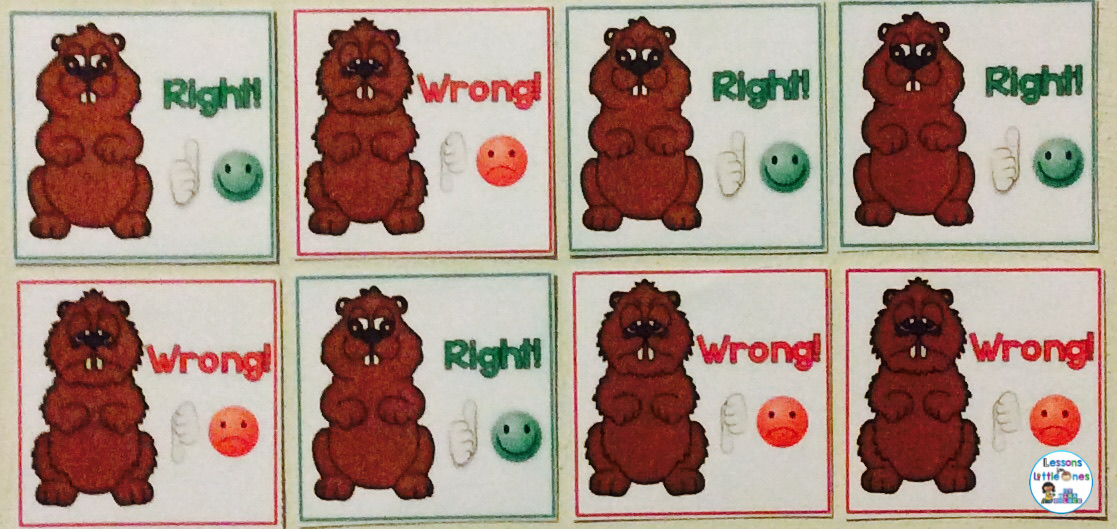
After 6 weeks, tally the results to see if Punxsutawney Phil’s prediction was accurate.
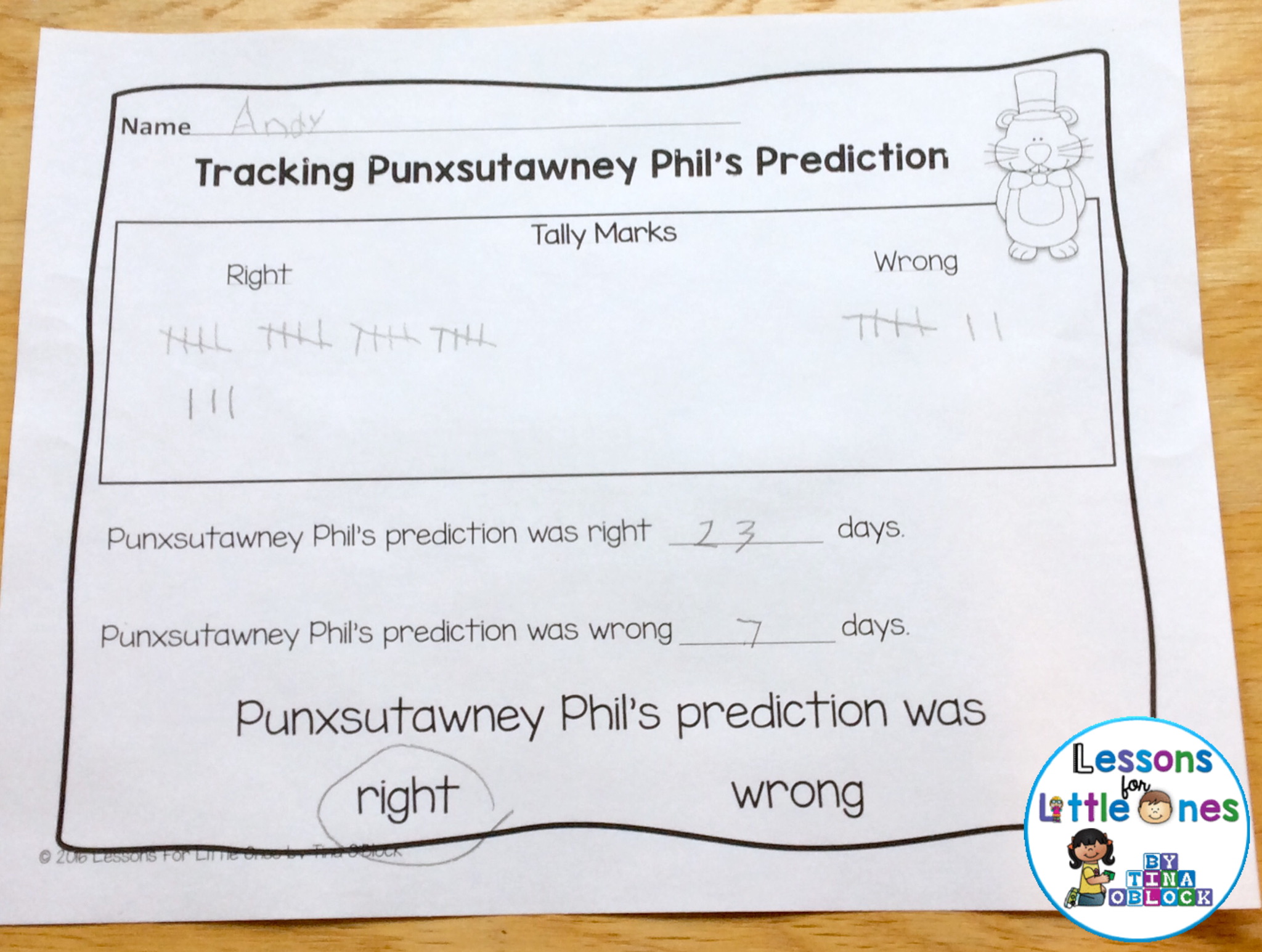
This free weather-tracking activity is a great extension to use after your Groundhog Day lessons.
Students track the weather for six weeks and reflect on whether Punxsutawney Phil’s prediction was correct — a perfect real-world connection to science and data collection.
👉 This freebie pairs perfectly with the Groundhog Day & Shadows Bundle, which provides all of the instruction, experiments, and activities leading up to Groundhog Day.
Want to use these activities with your students and save planning time?
If you love these Groundhog Day activities but don’t want to hunt for materials, create recording pages, or plan lessons from scratch, the Groundhog Day & Shadows Bundle has everything you need.
What’s Included:
✔ Interactive PowerPoint with real photos
✔ Groundhog Day & shadow interactive comprehension questions
✔ Printable recording pages and crafts
✔ Prediction activities and writing prompts
✔ Book lists and extension ideas
Teachers love that they can use this resource all week long — not just on February 2nd.
⭐ “I love this resource. I used this for Groundhog Day and it was a blast! Students loved the power point and the shadow activity. This is a great resource that had little prep and covered many outcomes in one day! Keep up the excellent work!” – Shauna H.
⭐ “This was great to have for Groundhog’s Day. We were able to use it all week.” – Sarah N.
⭐ “My class this year had almost no prior understanding of Groundhog’s Day — this was very helpful.” – Kimberly B.
⭐ “This resource is perfect for Groundhog Day! My students loved the product, especially playing with shadows! “ – Erin K.
⭐ “My students loved using this to learn about Groundhogs! It kept them very engaged.” – Jessica G.
👉 Click here to grab the Groundhog Day & Shadows Bundle and save time while keeping students engaged.
Already Teaching Hibernation Too?
If your winter science unit also includes hibernation, you can save time (and money) by grabbing the Hibernation & Groundhog Day Bundle Pack.
This expanded bundle includes everything in the Groundhog Day & Shadows Bundle plus a full hibernation unit — making it easy to plan several weeks of connected, hands-on learning.
⭐ “Love that these two products are bundled together… so appropriate for kindergarten.” – Amy M.
⭐ “This was such a fun activity! My students loved it and this kept them engaged the whole way through. “ – Naomi P.
⭐ “So many activities to use with students. Very engaging.” – Amy W.
👉 Click here to grab the Hibernation & Groundhog Day Bundle and save even more.

Pin it for later!