

I have always loved doing Mother’s Day questionnaires with my young students because their responses are so heartwarming and sometimes funny. The moms or caregivers love receiving them! However, a lot of times, the traditional questionnaires can be overwhelming for my young students.
They have too many questions and require a lot of writing. And, for many students, it quickly turns from something meaningful into something frustrating.
This is why I wanted to create something different that would work for students in preschool, kindergarten, or first grade that didn’t have quite as many questions and had fun themes with pictures that they could color or draw on.
Designed with Young Learners in Mind
These Mother’s Day questionnaires were created specifically for younger students who are still developing their writing skills.
Instead of long lists of questions, each page includes:
- Just a handful of simple, kid-friendly prompts
- Plenty of space for writing
- A drawing or coloring area to help students express their ideas and draw their mom or caregiver
This makes it much easier for students to complete independently and feel successful.
And honestly, their answers are often more meaningful because they aren’t overwhelmed.
To support all learners, I created both full-page and half-page versions, with full pages providing extra writing space for those who need it.
And, of course, options are also provided for students who may not have a mom, including versions for a grandma, aunt, nana, sister, or other loved one.
5 Fun, Themed Mother’s Day Questionnaires
If you know me, you know I like choice and flexibility! So, I created 5 different themes for these questionnaires so that they could be matched to your Mother’s Day gifts, celebration, event, or activities.
The themes include:
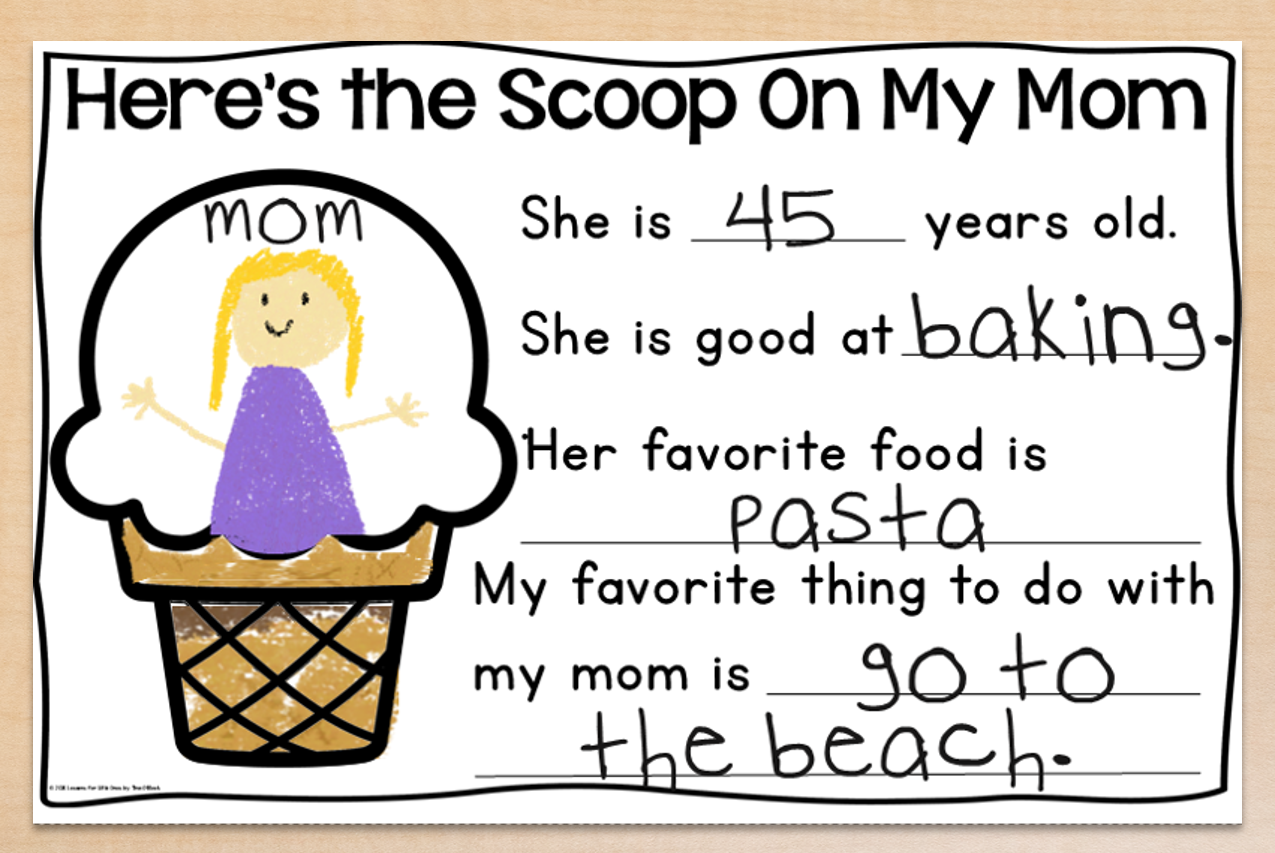
- Here’s the Scoop on My Mom (ice cream)
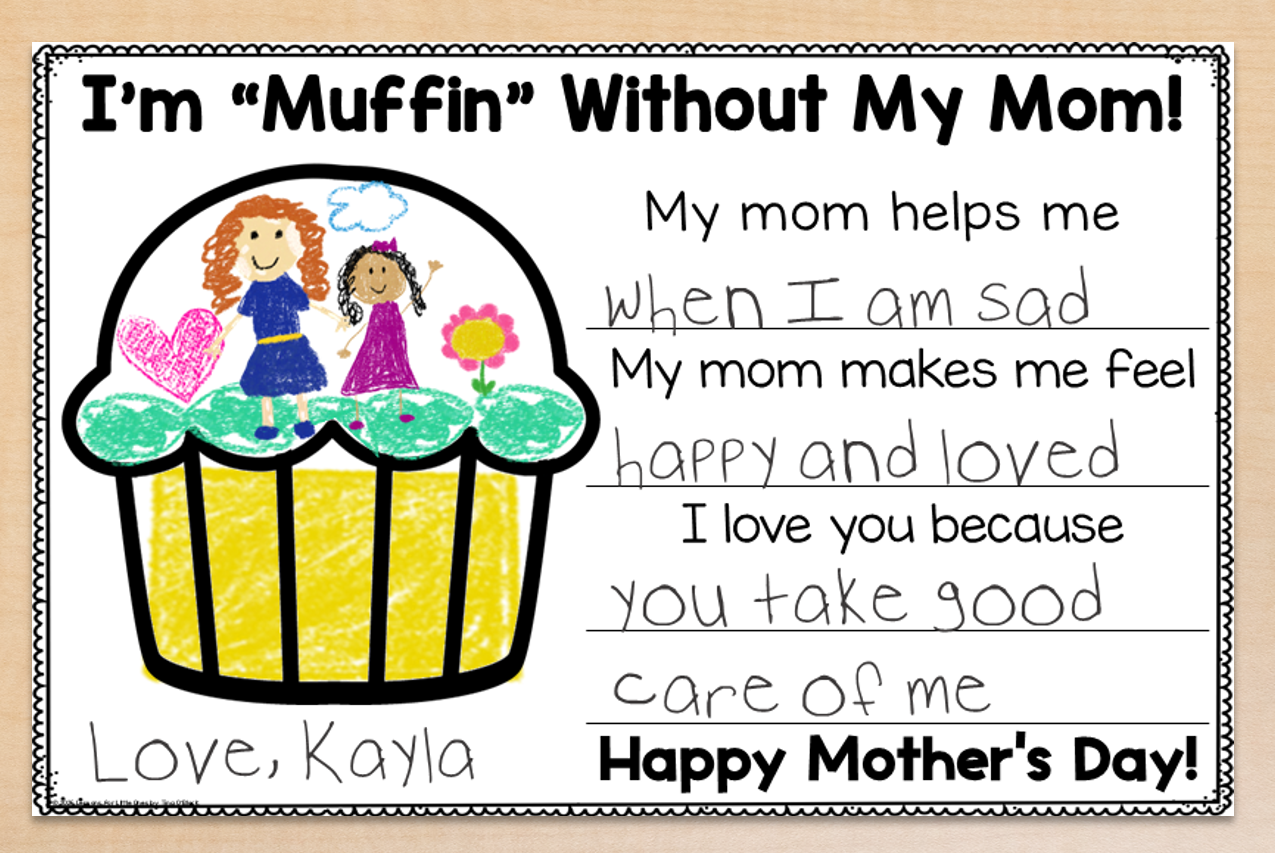
- I’m Muffin Without My Mom (perfect for Muffins with Mom!)
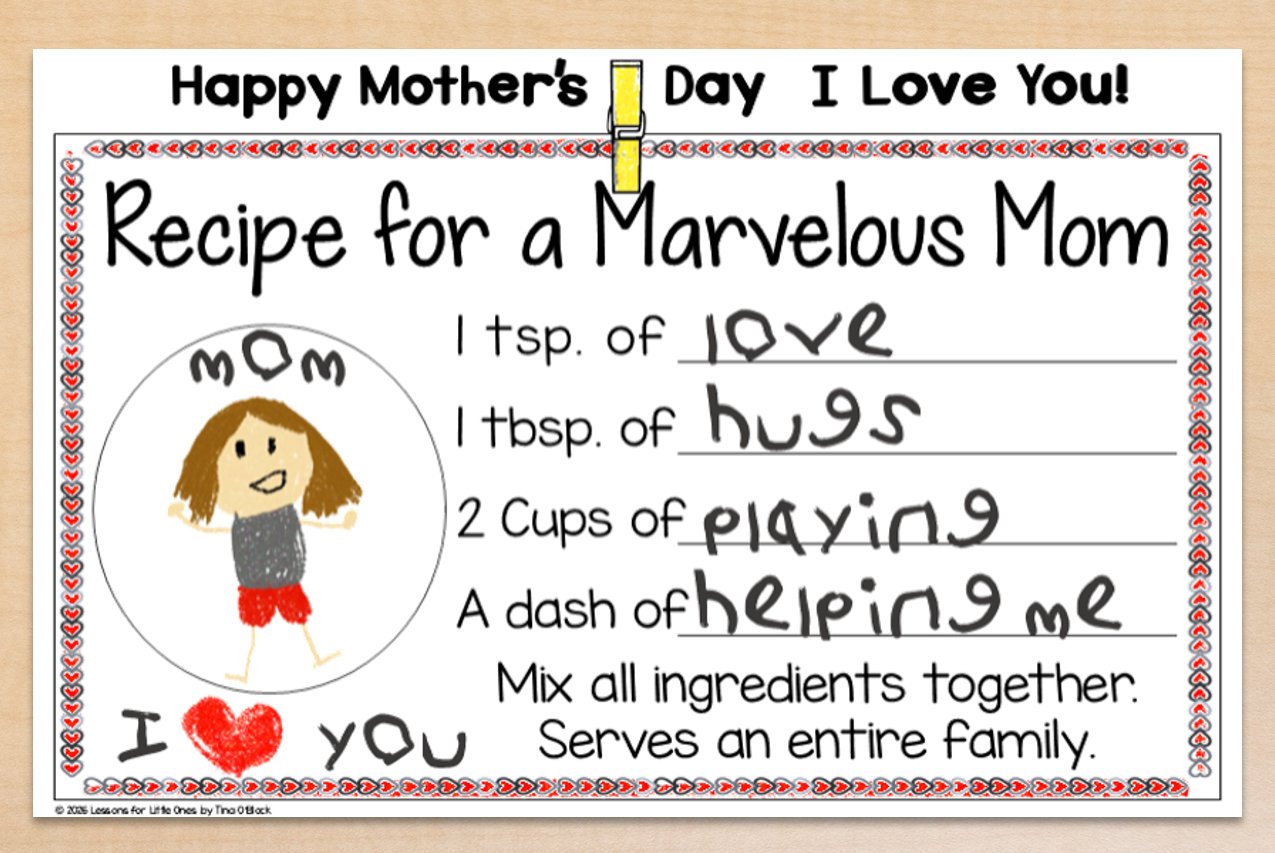
- Recipe for a Marvelous Mom (recipe card)
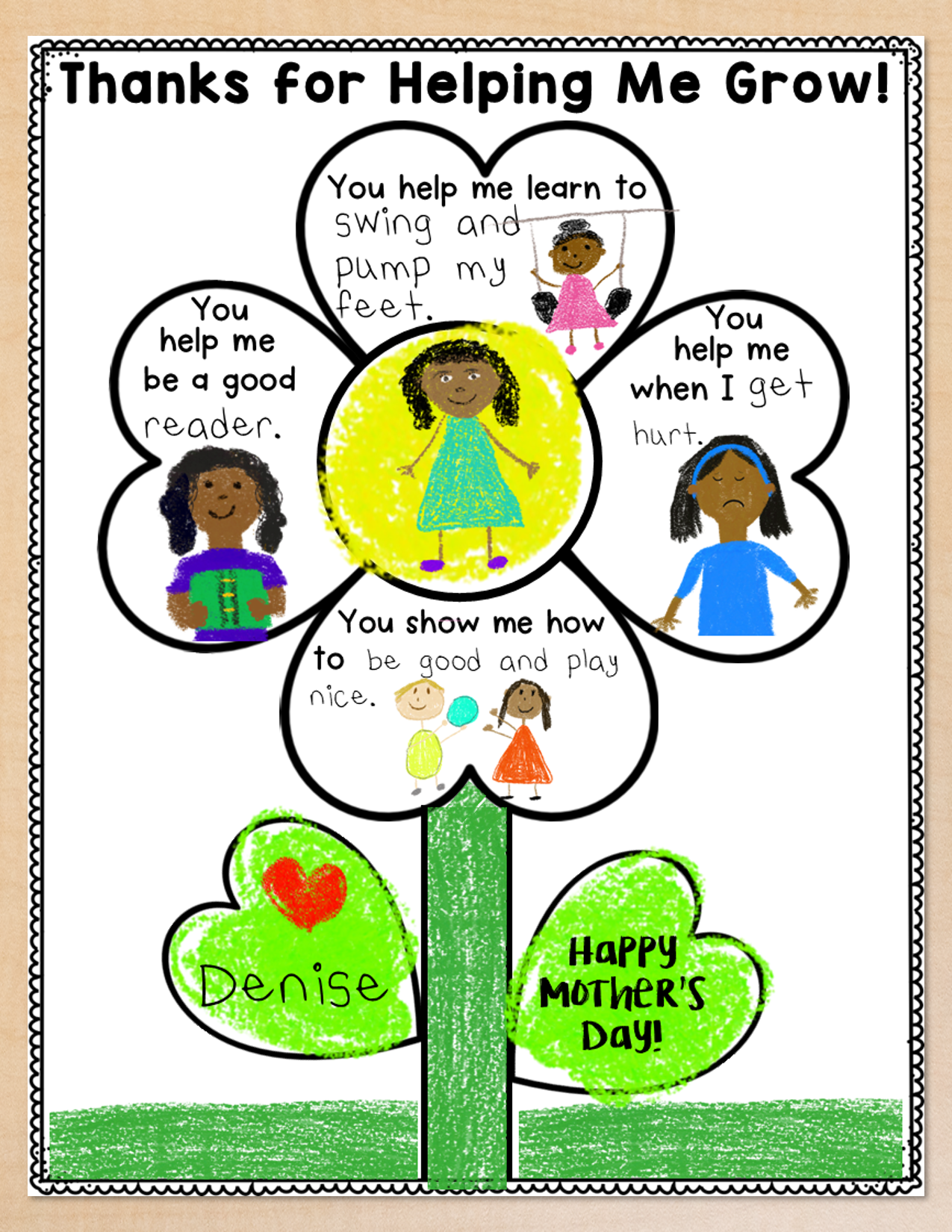
- Thanks for Helping Me Grow (flower)
- My Mom is Tea-riffic (tea, perfect for a Mother’s Day Tea)
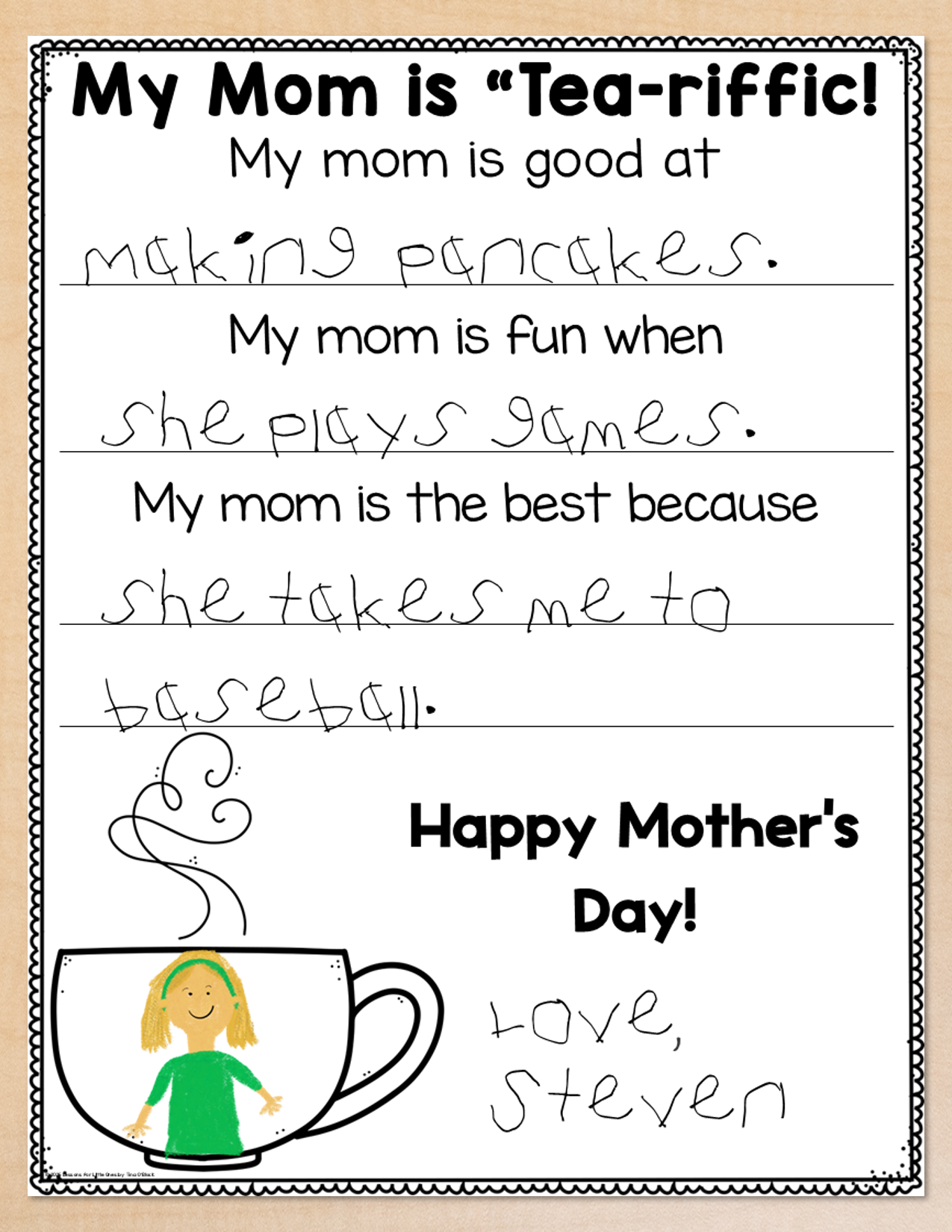
If you’ve ever felt like traditional questionnaires were just too much for your students, these are a great alternative.
They keep the focus where it belongs: on helping young students share their thoughts in a way that feels natural, simple, and meaningful.
If you would like to use these with your young students, they are available here.

